

The Hidden Cost of Waiting 7–10 Years for Hearing Help
What’s really behind the delay, and how people move through it
You know something has shifted. You’ve noticed it for a while now. The effort it takes to follow conversation in restaurants. The way you have to concentrate harder in meetings. The volume on the TV creeping up. Your partner asking if you heard what they just said. Again.
And yet when someone suggests you get your hearing checked – or when the thought crosses your own mind – you push it away. Not now. Not yet. Maybe later.
Here’s the question worth asking: why not?
You’d get your eyes checked without hesitation. You’d go to the doctor for a persistent cough. You’d address high blood pressure or a dozen other things that need attention.
But hearing? That one you avoid. That one you explain away. That one you wait on, sometimes for years.
The average person waits seven to ten years between noticing hearing changes and actually getting hearing aids. Seven to ten years of working harder than they need to. Seven to ten years of compensating, withdrawing, missing moments.
That delay isn’t about laziness or logistics. It’s about something deeper.
Even When You Know Better, the Stigma Still Gets You
Steve, one of the founders of Empowerful, lived this resistance firsthand.
For years, he had no idea he had hearing loss. His brain had been compensating so effectively – filling in missing sounds, working overtime – that he never realized anything was off. When he finally got tested, the audiologist explained he had what’s called a cookie bite hearing loss, a pattern that affects mid-range frequencies where most speech lives. It’s possible he was born with it. His brain just adapted.
Here’s what makes Steve’s story so telling:
He was part of the friend group who encouraged Michelle (his wife, our other founder) to get her first hearing aids when she was nineteen. He helped normalize it for her. He made it feel like no big deal. He saw, up close, how much hearing aids changed her life.
Michelle has worn hearing aids ever since. She’s worked in audiology for over ten years. Steve has been immersed in the hearing world through her life and career for a decade. He is no stranger to hearing loss, hearing aids, or the transformation they create.
And still, when it came to himself, his first thought was: I’m too young for hearing aids. It must be something else.
That’s how powerful the stigma is.
It overrides logic. It overrides firsthand experience. It overrides everything you know intellectually to be true. Even when you’ve watched someone you love thrive with hearing aids, even when you’ve spent a decade adjacent to the audiology world, the cultural conditioning runs so deep that you still think: not me. Not yet. I’m not that person.
If someone like Steve – with every reason to understand and accept hearing loss – still resisted getting help, what does that tell us?
The problem isn’t education. It’s not awareness. It’s not access to information.
The problem is stigma so entrenched in our culture that it operates below conscious thought. It’s the automatic association between hearing aids and being old, diminished, irrelevant. It’s the fear that admitting you need help with something as fundamental as hearing means you’re sliding toward a version of yourself you’re not ready to become.
This is why people wait seven to ten years.
Why Hearing Aids Feel Different Than Other Health Tools
You can wear glasses and still feel young. You can take blood pressure medication and still feel vital.
But hearing aids? They carry different weight.
They feel like a visible admission that you’re getting older, that you’re moving into a category of person you’re not ready to be yet.
Part of this is cultural conditioning. We’ve been trained to see hearing aids as something old people wear. Grandparents. The elderly. People in nursing homes.
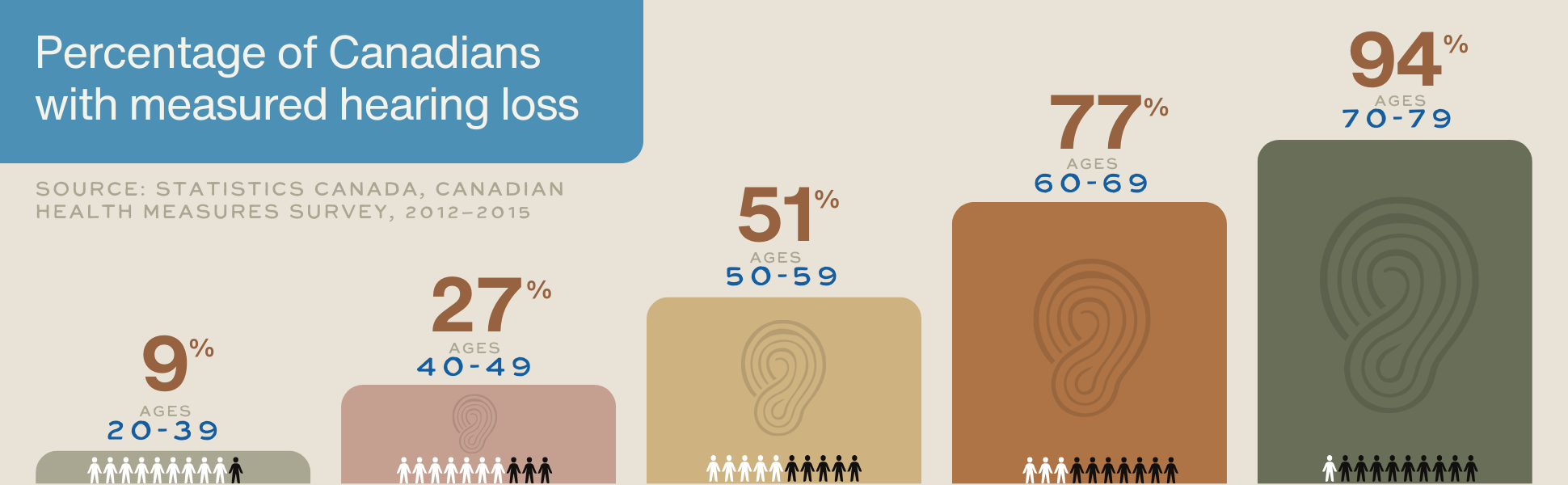
Even though hearing loss affects people in their 40s and 50s at significant rates – even though 27% of people aged 40-49 already have measurable hearing loss – the image in our heads is still tied to advanced age.
Admitting you need hearing aids feels like admitting you’re becoming that image, whether you’re actually anywhere near it or not.
The stigma operates on multiple levels:
Visibility. Hearing aids are worn on your body, near your face, where people might see them. Even though modern hearing aids are incredibly small and discreet, there’s still a psychological hurdle around having something that announces a change you’re not ready to announce.
The fear of what comes next. Hearing aids feel like the first domino. If this, then what else? If your hearing is going, what’s next?
This fear isn’t irrational. In a youth-obsessed, ageist culture, any sign of aging feels threatening. It threatens your professional relevance. Your social desirability. Your sense of yourself as someone who’s still in the prime of life, still capable, still fully in the game.
The Independence Thing
We live in a culture that treats independence as the highest virtue. Needing help is framed as weakness. Asking for support is seen as failure.
So admitting you need hearing aids feels like admitting you can’t handle something on your own anymore. It feels like weakness, even though it’s not. It feels like giving in, even though it’s actually taking action.
Steve’s resistance captures this perfectly. Even surrounded by evidence that hearing aids work, even married to someone whose life was transformed by them, even having helped normalize them for a friend years earlier, he still felt the pull of the stigma. He still thought he was too young. He still wanted it to be something else.
Because admitting it was hearing meant accepting something about himself he wasn’t ready to accept.
The Vanity Factor
Health influencers talk openly about their Oura rings, glucose monitors, fitness trackers. That’s positioned as optimization, biohacking, taking your health seriously.
Hearing aids do the exact same thing – they’re wearable tech that optimizes a biological input so you can participate fully.
But somehow they’re supposed to be invisible? Hidden? Apologized for?
Apple Watches aren’t invisible. They’re chunky and obvious and people wear them everywhere. Glasses aren’t invisible – they’re the first thing you see on someone’s face. AirPods stick straight out of your ears.
Nobody whispers about whether their smartwatch is “discreet enough.” Nobody waits for their Fitbit to be smaller before they’ll wear it. The goal isn’t invisibility.
The goal is function.
Yes, some hearing aids are small and nearly invisible – like the Oticon Zeal Steve wears, which sits inside the ear. Others sit visibly behind the ear – like the ReSound Vivia Michelle wears. Both are well-designed, effective technology.
But why is visibility even the question?
Whoop bands wrap around your wrist. Oura rings sit on your finger. Glasses cover half your face. The point isn’t whether people can see them. The point is whether they work.
If you’re postponing because you’re waiting for devices that nobody will notice, you’re solving for the wrong problem. The problem isn’t that hearing aids are visible. The problem is that we’re still treating hearing aids like something to be embarrassed about instead of what it actually is: health tech that lets you stay in the conversation.
The Seven to Ten Year Delay Is Ridiculous
Let’s just say it: waiting seven to ten years to address something that’s draining your energy, affecting your relationships, and making daily life harder than it needs to be is ridiculous.
Not because you’re ridiculous. Because the stigma is ridiculous.
Because the cultural narrative that treats hearing aids as something shameful instead of something empowering is ridiculous.
Because the idea that you should just tough it out and work harder instead of getting a tool that actually helps is ridiculous.
Empowerful exists to change that narrative. To reframe hearing aids as what they actually are: tools that restore ease, expand capacity, and protect presence. To show that admitting your hearing has changed doesn’t mean what you’re afraid it means.
Here’s What’s Actually True
The resistance makes sense. Hearing loss is tangled up with identity, aging, vanity, independence, and cultural stigma in ways that make it genuinely hard to address.
But here’s what’s also true: the thing you’re resisting isn’t what you think it is.
Hearing aids don’t make you look old. They make you someone who’s chosen ease over invisible strain.
They don’t diminish your capability. They restore it.
They don’t mark the beginning of decline. They mark the beginning of addressing something that’s been quietly costing you energy, connection, and presence for longer than you realize.
The stats on this are striking:
What You Can Do
Get a hearing test with an independent audiologist. It gives you information. Just information. It tells you what’s actually happening instead of leaving you in the murky space of wondering and resisting and explaining things away.
If it turns out your hearing has shifted, hearing aids give you a choice: keep compensating and working harder than you need to, or restore the ease you remember having.
Hearing aids are one of the most underestimated tools of midlife.
They’re small, well-designed, and built for real life – whether that means handling rain and sweat on a trail run or sitting invisibly while you lead a meeting.
More importantly, they give you back energy you’ve been spending without realizing it. They restore confidence in what you’re hearing. They decrease the anxiety and effort that’s been quietly mounting. They let you participate fully without the hidden cost.
That’s what Empowerful tools do. They expand capacity. They protect presence. They help you stay fully engaged in the life you already have.
The Choice
The stigma is powerful. But so is the choice to reject it.
Steve did. Thousands of people do every year when they finally decide the cost of waiting is higher than the cost of acting.
The resistance makes sense. But it doesn’t have to run the show.
You can acknowledge the grief, the fear, the cultural baggage – all of it – and still choose to act. You can admit your hearing has changed without letting that mean what you’re afraid it means.
And you can get the support that helps you stay present, connected, and vital in the life you’re actually living right now.