

When “Never Mind” Becomes the End of Connection
Sometimes we don’t hear what someone said the first time, so we ask them to repeat it.
“Sorry, what was that?”
They start to say it again, then stop halfway through and wave their hand dismissively.
“Never mind.”
And the conversation closes right there.
Usually the moment is small enough that nobody really reacts to it. Dinner continues. The TV stays on in the background. Somebody keeps unloading groceries. Life moves forward normally. Except something tiny just disappeared in the middle of the interaction.
Because whatever they said mattered enough to say once.
Maybe it was a joke. Maybe it was a passing observation. Maybe it was just one of those small relational offerings people make all day long without even thinking about it. A comment about the neighbor’s dog. Something funny that happened at work. A half-formed thought that only existed because another person was nearby to say it to.
Then suddenly it becomes too exhausting to repeat.
After a while, these moments start accumulating in strange ways.
Not dramatically. Quietly.
A sentence gets lost here. A story fragment disappears there. Someone stops finishing their thoughts from another room because they assume we won’t catch it anyway. Someone gets tired of repeating themselves over restaurant noise. Conversations become slightly shorter. Less spontaneous. More functional.
A lot of relationships slowly reorganize themselves around efficiency without anybody meaning to.
We start communicating the important logistical stuff. Appointment times. Grocery lists. School pickup. Did you pay that bill. Can you grab milk on the way home.
Meanwhile some of the softer connective tissue starts thinning out almost invisibly.
- The random observations.
- The pointless stories.
- The half-jokes.
- The little throwaway comments people make simply because sharing life together is part of being close to someone.
Collectively, those moments are attachment.
They’re how people stay woven into each other’s lives over years.
And what makes “never mind” painful isn’t usually the sentence itself. It’s the feeling underneath it. The sudden collapse of an opening that existed for one second and then disappeared.
After enough of those moments, many of us start anticipating the withdrawal before it even happens.
We hesitate before asking someone to repeat themselves because we can already feel the slight shift in energy coming. The impatience. The sigh. The quick decision that explaining it again suddenly costs more effort than the conversation is worth.
So sometimes we pretend we heard.
Sometimes we smile and nod while mentally assembling context clues like we’re solving a small domestic mystery.
Sometimes we stay quieter entirely because constantly interrupting the flow of conversation starts feeling socially expensive.
And externally, this can all look incredibly normal.
Couples still love each other. Families still function. Friends still meet for dinner. Meanwhile tiny moments of connection keep evaporating at the edges of everyday life so gradually that nobody fully notices the accumulation while it’s happening.
The difficult part is how easy it becomes to internalize the emotional logic underneath repeated “never minds.”
Not consciously at first.
Just a slow growing feeling that maybe our access to other people comes with too much friction now. Maybe conversation feels easier for everyone else when less effort is required. Maybe asking again has started feeling heavier in the room than silence.
A lot of us carry that feeling privately for years before realizing how much it changed the way we participate.
Because hearing strain rarely announces itself through one dramatic moment.
More often it arrives through hundreds of tiny disappearances.
When Listening Starts Requiring More Effort
Most hearing changes happen gradually. People usually notice the exhaustion before they notice the hearing itself.
Conversations get harder to follow when there’s background noise. Meetings feel disproportionately draining. Group settings require more concentration than they used to. By the end of the day, many people feel mentally overloaded without fully understanding why.
Because the shift happens slowly, it rarely feels obvious. People tend to blame stress, burnout, aging, introversion, distraction, poor sleep, or just the general weight of modern life. Sometimes those things are part of it. Sometimes the brain has simply been working much harder to keep up with sound than anyone realizes.
Hearing loss is more common than most people realize:
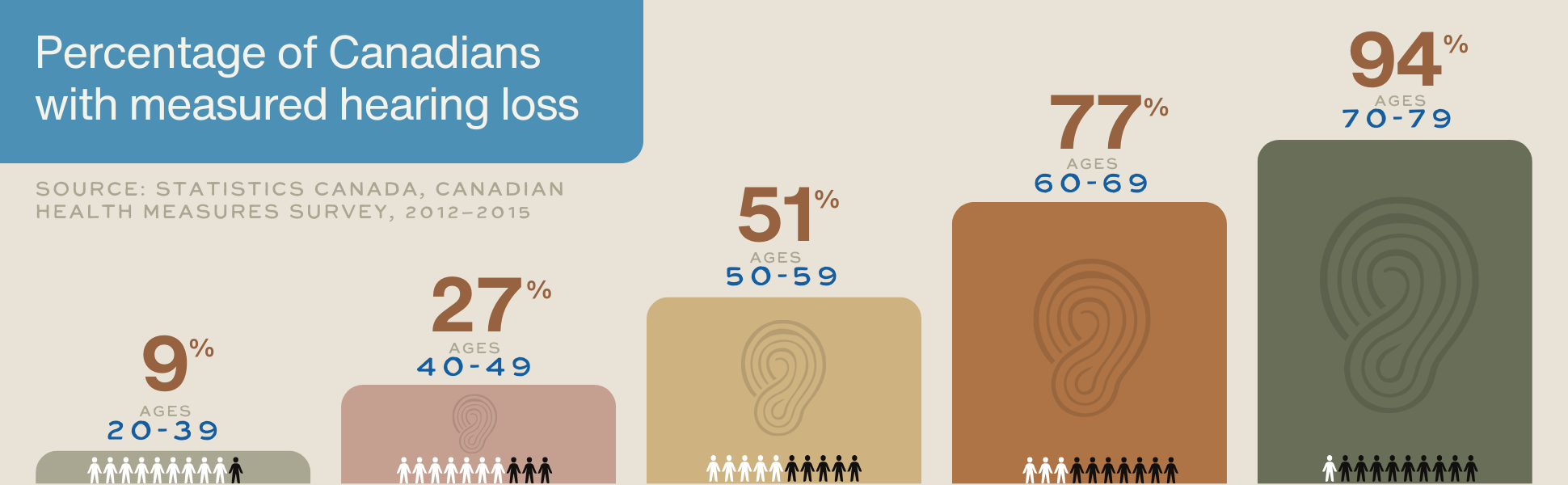
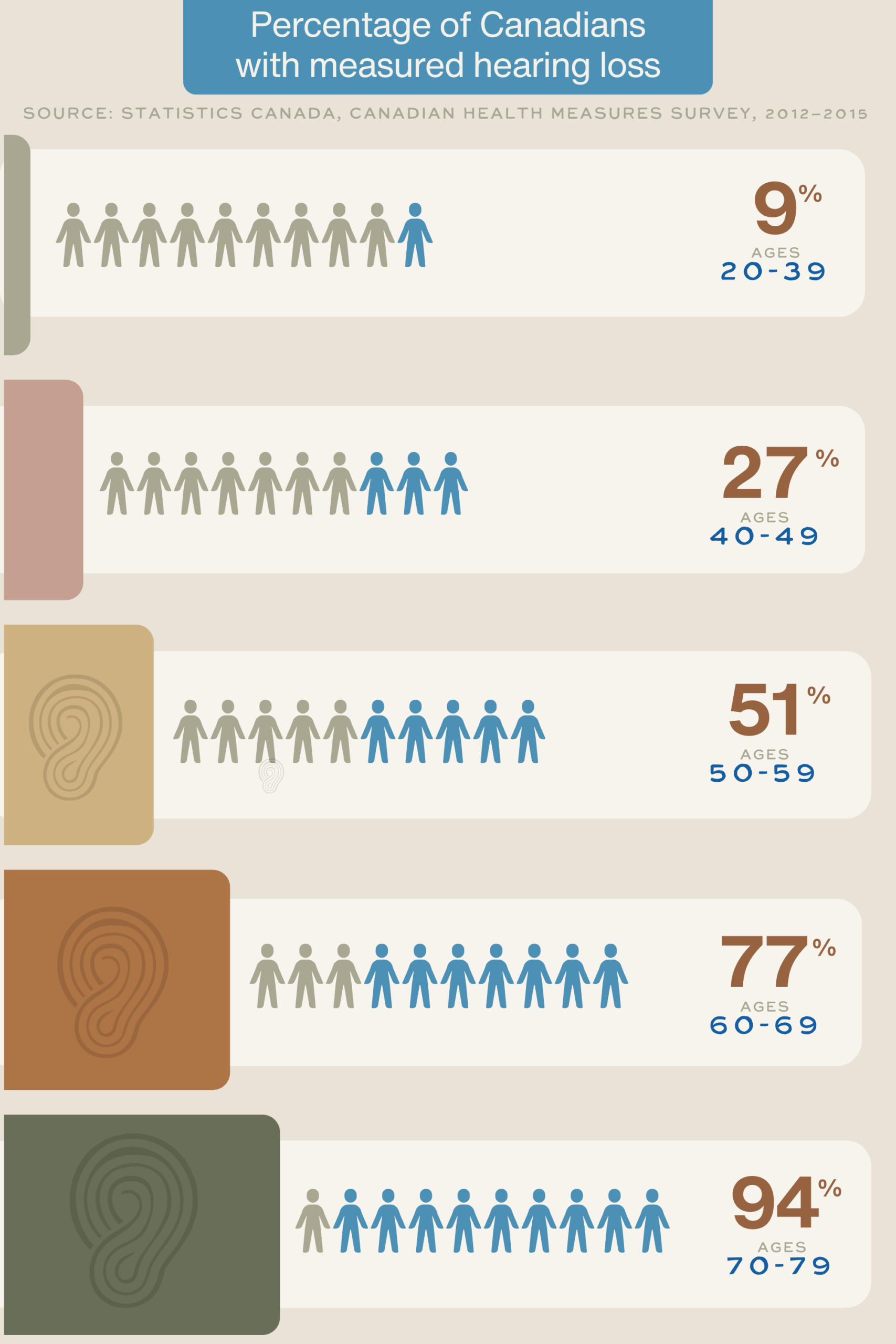
A hearing test with an independent audiologist can help determine whether listening effort is contributing to the fatigue, frustration, or withdrawal you’re experiencing in everyday life. It’s not a verdict. It’s just information about where your energy might actually be going.
When hearing is part of the picture, the right support can make conversations, work environments, and daily interaction feel significantly easier. Life stops requiring quite so much effort to stay connected to.
Meet Michelle & Steve
Michelle was born with hearing loss but wasn’t tested until high school. She got her first hearing aid at nineteen. Steve’s hearing changed more gradually. For years, he didn’t realize how much effort his brain was putting into following conversations, noisy rooms, meetings, restaurants, and everyday life.
Together, we’ve experienced how deeply hearing shapes energy, relationships, attention, confidence, and the feeling of staying connected to the people around you.

Meet Michelle & Steve
Our story begins with two different paths to one truth: hearing shapes everything.
Michelle was born with hearing loss but wasn’t tested until high school. She received her first hearing aid at nineteen. Steve lived for years without realizing he had hearing loss. His brain worked hard to fill in missing sounds, which turned listening into quiet effort.
Together, we’ve seen how good hearing care restores energy, connection, and ease.

Related Articles
SUBSCRIBE TO