

Why Socializing Feels So Draining and What Hearing Has to Do With It
We get home from dinner with people we genuinely like and suddenly feel like we need forty-five minutes alone in a dark room before another person speaks to us again.
At first, a lot of us assume this means something emotional.
Maybe we’re more introverted than we used to be. Maybe work has fried our social battery. Maybe we’re overwhelmed in general. Maybe everybody reaches middle age and secretly wants to disappear into a quiet house with sweatpants and absolutely no follow-up questions after 8 p.m.
Some of that is probably true.
But there’s another layer that often goes unnoticed for a very long time, especially for people whose hearing has gradually become more effortful without fully realizing it yet.
Because socializing requires an astonishing amount of tracking.
At a noisy restaurant, we’re following one conversation while filtering out twelve others happening nearby at the same time. Someone across from us starts speaking just as a server drops cutlery into a bin behind our chair. Somebody else laughs loudly two tables over right as our friend quietly says something important. A person beside us suddenly jumps into the conversation before we’ve fully processed the sentence that came before it.
And conversation never pauses politely to let the brain catch up.
It keeps moving.
Stories overlap. People interrupt each other affectionately. Someone starts talking while chewing french fries. Somebody responds while facing the parking lot instead of the table. Half the group remembers a shared story from ten years ago and everybody starts talking at once because apparently this is now a community theater production of chaos.
Most of the time, we stay inside it well enough that nobody notices how much work it actually is.
That’s partly because human beings are remarkably adaptive socially. We fill gaps from context. We read facial expressions. We track tone and rhythm and body language. We reconstruct meaning quickly enough that conversations keep flowing normally even when parts of the sound itself arrived incomplete.
And if we miss something entirely, there are ways to smooth over that too.
- A laugh.
- A nod.
- “Sorry, what was that?”
- A joke about getting old.
- A strategic redirect back toward the other person before anybody realizes we’re still assembling the conversation internally.
The adaptations become so automatic that many of us stop recognizing them as adaptations at all.
We just know that by the end of the night we feel strangely exhausted.
Not emotionally exhausted exactly.
More like our brains have been running a complicated background process for four straight hours.
Sometimes the fatigue shows up on the drive home when the silence in the car suddenly feels almost physical. Sometimes it appears the next morning when we realize we still haven’t recovered from a perfectly nice dinner with people we love.
And because hearing changes gradually for many people, the exhaustion rarely announces itself clearly.
Instead it disguises itself as personality.
We think maybe we’ve become less social lately. Less tolerant of crowds. Less patient in noisy restaurants. Maybe we’re becoming boring. Maybe everybody else still enjoys this stuff normally and we’re the only ones quietly calculating whether the birthday dinner reservation is worth the amount of effort it’s going to take to follow six conversations bouncing around a concrete room with exposed ceilings and Edison bulbs.
Meanwhile our brains are doing enormous amounts of invisible work trying to separate signal from noise long enough to stay connected to the people sitting directly in front of us.
The difficult thing about listening effort is that it often steals energy before it steals understanding.
A lot of people can still technically hear conversation while becoming steadily more exhausted by the amount of concentration required to keep tracking it.
And after enough evenings of leaving social situations feeling depleted in ways that don’t quite match the actual experience itself, some of us start withdrawing a little without fully understanding why.
- We decline invitations more often.
- We choose quieter restaurants.
- We stop lingering as long at gatherings.
- We feel relief when plans get canceled, then feel guilty about the relief afterward because we know we love these people and we genuinely wanted to see them.
Sometimes what we call social exhaustion is actually listening exhaustion that’s been misunderstood for years.
When Listening Starts Requiring More Effort
Most hearing changes happen gradually. People usually notice the exhaustion before they notice the hearing itself.
Conversations get harder to follow when there’s background noise. Meetings feel disproportionately draining. Group settings require more concentration than they used to. By the end of the day, many people feel mentally overloaded without fully understanding why.
Because the shift happens slowly, it rarely feels obvious. People tend to blame stress, burnout, aging, introversion, distraction, poor sleep, or just the general weight of modern life. Sometimes those things are part of it. Sometimes the brain has simply been working much harder to keep up with sound than anyone realizes.
Hearing loss is more common than most people realize:
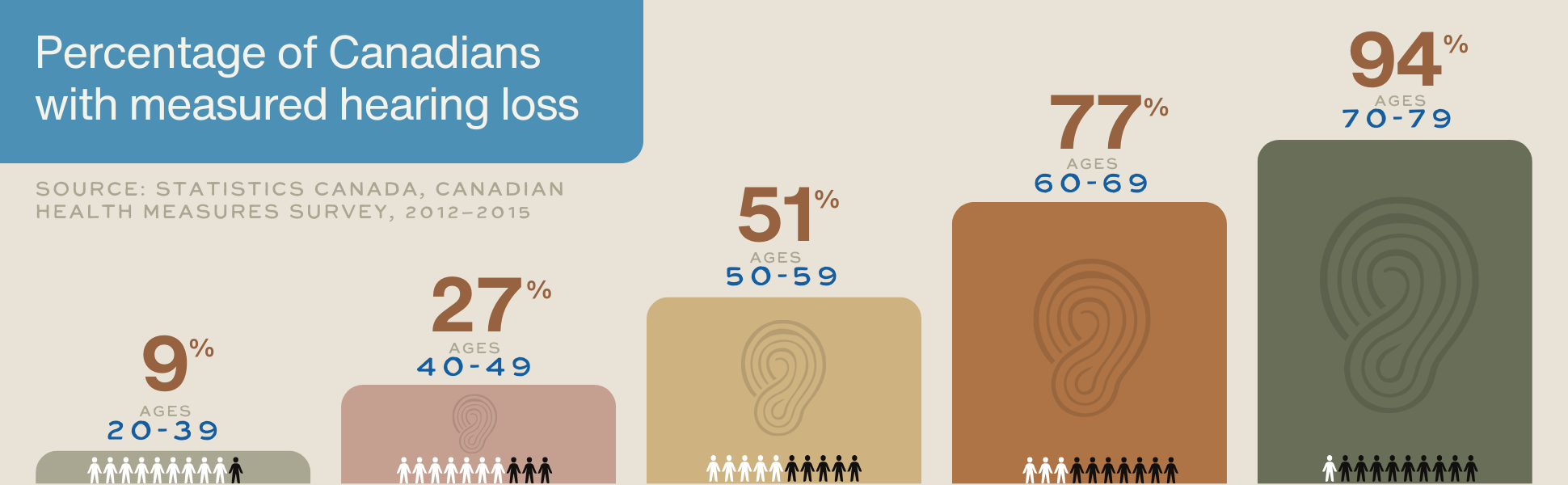
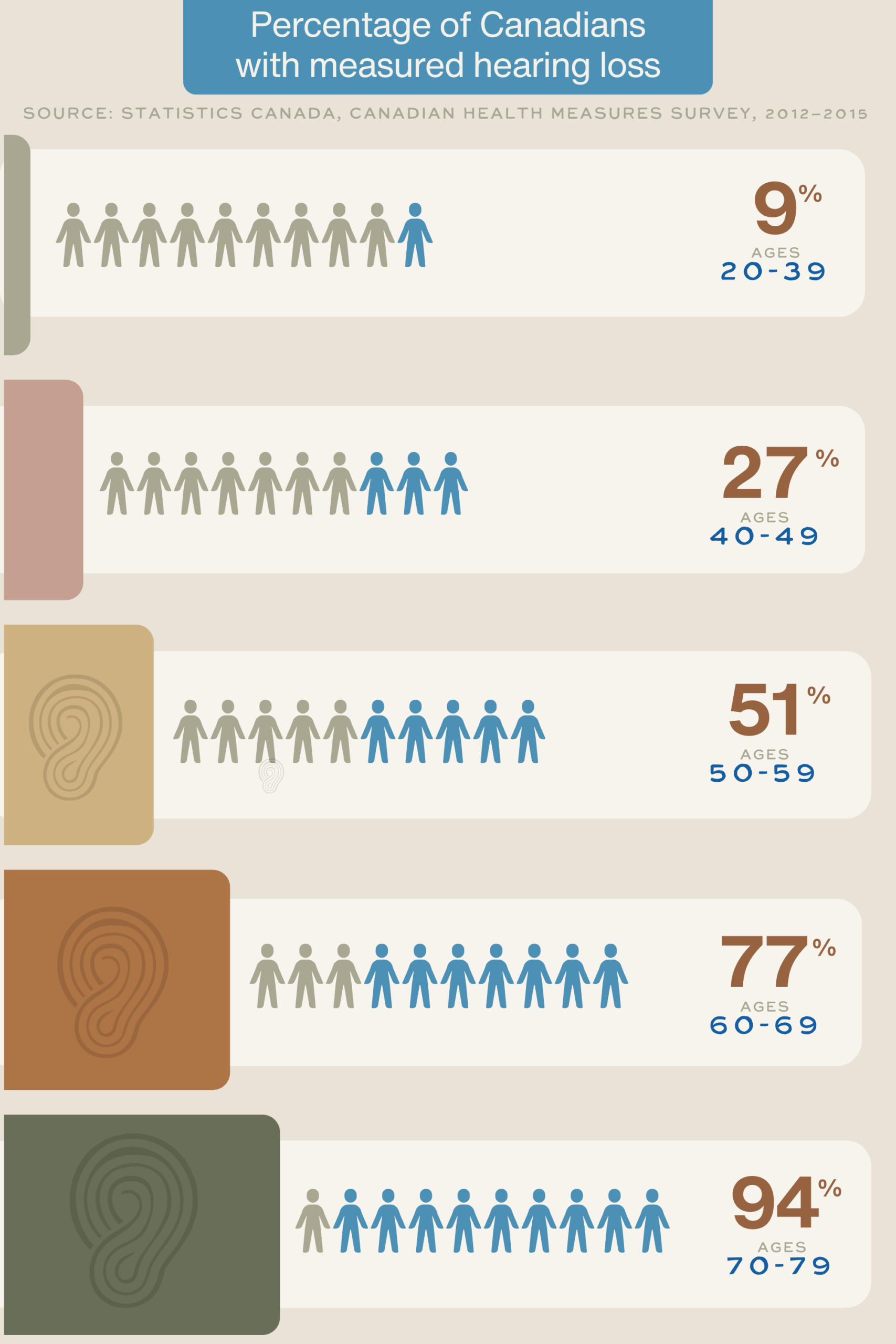
A hearing test with an independent audiologist can help determine whether listening effort is contributing to the fatigue, frustration, or withdrawal you’re experiencing in everyday life. It’s not a verdict. It’s just information about where your energy might actually be going.
When hearing is part of the picture, the right support can make conversations, work environments, and daily interaction feel significantly easier. Life stops requiring quite so much effort to stay connected to.
Meet Michelle & Steve
Michelle was born with hearing loss but wasn’t tested until high school. She got her first hearing aid at nineteen. Steve’s hearing changed more gradually. For years, he didn’t realize how much effort his brain was putting into following conversations, noisy rooms, meetings, restaurants, and everyday life.
Together, we’ve experienced how deeply hearing shapes energy, relationships, attention, confidence, and the feeling of staying connected to the people around you.

Meet Michelle & Steve
Our story begins with two different paths to one truth: hearing shapes everything.
Michelle was born with hearing loss but wasn’t tested until high school. She received her first hearing aid at nineteen. Steve lived for years without realizing he had hearing loss. His brain worked hard to fill in missing sounds, which turned listening into quiet effort.
Together, we’ve seen how good hearing care restores energy, connection, and ease.
Related Articles
SUBSCRIBE TO