

What Open Offices Demand of Your Brain All Day Long
By around three in the afternoon, the office starts sounding less like a place where work is happening and more like a building full of people trying to win tiny invisible battles against each other’s attention.
Someone near the windows has a laugh that arrives half a second before everyone else’s, loud enough that the whole floor absorbs it whether we want to or not. Two desks over, a man has now said “circling back” so many times the phrase no longer feels connected to language. It’s become percussion. Slack notifications keep firing somewhere behind us in uneven little bursts. The HVAC system exhales every few minutes with the tired persistence of an old refrigerator trying to survive one more summer. Somebody microwaved fish at lunch and the smell is still hanging around the office like a grudge.
None of this would matter on its own. We probably could have tolerated any single part of it for years.
The strange thing is how accumulation works. How the brain keeps having to reopen the same tiny internal negotiation over and over again. Is that sound important. Is someone talking to me. Was that my name. Do I need to answer this now. Can I stay inside this thought long enough to finish it before something else interrupts it again.
By midafternoon, many of us are no longer fully thinking. We’re recovering thought in fragments.
We open an email. Someone nearby starts discussing vacation plans directly beside the printer because apparently the printer area has become a kind of civic plaza. We look up automatically. Somebody wheels a chair across the floor behind us with the acoustic force of a shopping cart in a parking garage. We remember the sentence we were about to write thirty seconds later while pretending to follow a project update we already partially lost somewhere around slide four.
The day starts developing gaps in it. Small disappearances. Tiny cognitive blackouts so ordinary we stop noticing them.
And externally, competence is still happening. That’s part of what makes this difficult to recognize.
Everyone still looks functional. Work gets submitted. Meetings happen. People nod at each other while rinsing soup containers in the office kitchen. Someone says “Happy Friday” with the flattened emotional exhaustion of a hostage video. Technically the system appears operational. Meanwhile attention has spent eight consecutive hours being pulled apart and stitched back together again like a shirt pocket hanging by two threads.
There’s a certain kind of exhaustion that comes from your attention getting interrupted all day long.
A lot of work depends on this condition. Open offices just make the mechanics easier to see.
After a while the environment starts revealing what the culture actually values. Immediate responsiveness. Constant accessibility. The appearance of collaboration. A person visibly available at all times becomes more legible to the system than a person thinking quietly somewhere behind a closed door.
We can see people adapting to this all day long:
- Noise-canceling headphones with nothing playing through them.
- People booking conference rooms just to sit alone for forty minutes and think in peace.
- People arriving absurdly early because the hour before everyone else gets there feels almost sacred.
- People staying late after the office empties out because seven-thirty at night finally feels quiet enough to concentrate.
- Someone standing alone near the stairwell scrolling their phone for ten unnecessary minutes because it’s the only place in the building where nobody is currently asking them for something.
- Someone sitting in their parked car after work with the engine off, not ready to hear another voice yet.
The office before nine in the morning can feel like finding a lake before tourists arrive. Then by ten-thirty the whole thing wakes up again. Footsteps. Overlapping conversations. Snack wrappers. Ringing phones. Somebody asking “quick question” with the emotional energy of a home invasion. The low rolling weather system of other people’s voices entering the brain whether we invited them in or not.
Some of us absorb this more easily than others. Some of our auditory systems track speech in noise with less effort. Some nervous systems tolerate fragmentation better. Age changes it. Sleep changes it. Stress changes it. The amount of remaining bandwidth left after ordinary life has already taken its share changes it too.
And because the exhaustion arrives slowly, many of us interpret the strain as a personal failure first.
Maybe we’re less focused lately. Less disciplined. Less adaptable.
Meanwhile the environment itself is asking the brain to perform an almost absurd filtering task all day long. Separate signal from noise. Track speech across distance. Suppress interruption. Recover concentration. Repeat.
Productivity starts slipping after a while too, although a lot of us don’t notice it immediately because technically we’re still getting things done.
We lose the feeling of getting fully pulled into something. Thoughts start feeling slippery. We reread the same paragraph three times. We forget what we were about to say halfway through saying it. Even interesting work starts feeling harder to stay connected to because our attention keeps getting broken apart before it can really settle anywhere.
By the end of the day, a lot of us don’t even feel tired from the work itself. We feel tired from constantly having to recover our concentration over and over again.
A lot of us assume this is just what modern work feels like now. Maybe it is.
Still, there’s something revealing about how many people spend their days searching for small pockets of sensory relief inside environments supposedly designed for productivity.
The adaptations themselves tell the story.
Because human beings usually adapt long before we fully understand what we’re adapting to.
When Listening Starts Requiring More Effort
Most hearing changes happen gradually. People usually notice the exhaustion before they notice the hearing itself.
Conversations get harder to follow when there’s background noise. Meetings feel disproportionately draining. Group settings require more concentration than they used to. By the end of the day, many people feel mentally overloaded without fully understanding why.
Because the shift happens slowly, it rarely feels obvious. People tend to blame stress, burnout, aging, introversion, distraction, poor sleep, or just the general weight of modern life. Sometimes those things are part of it. Sometimes the brain has simply been working much harder to keep up with sound than anyone realizes.
Hearing loss is more common than most people realize:
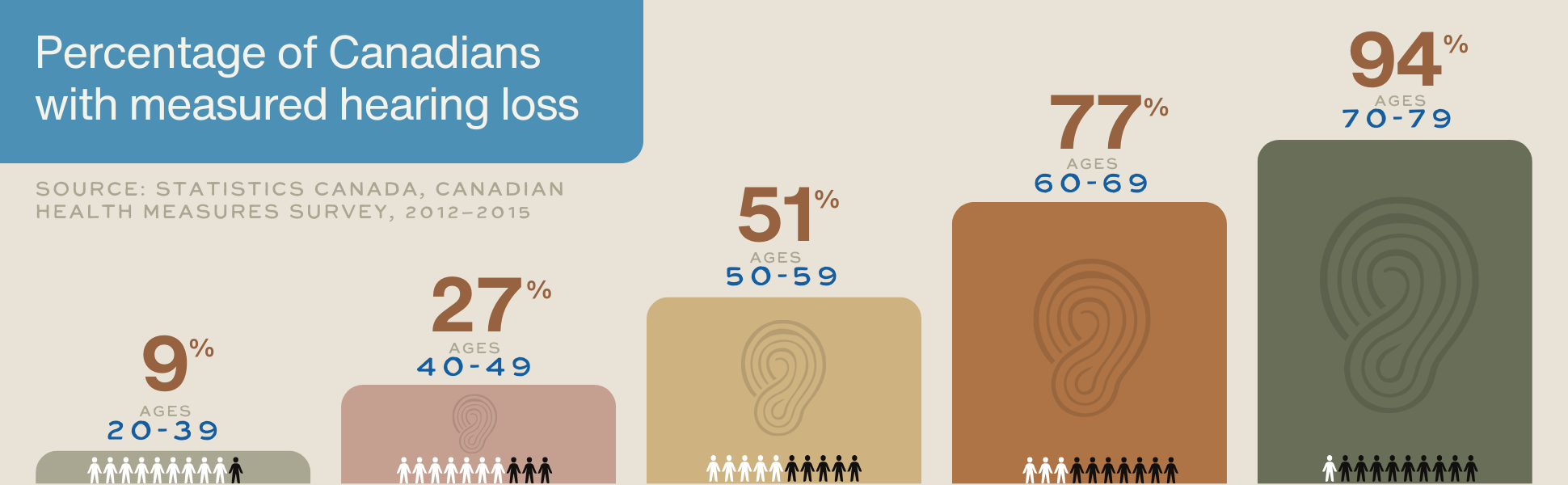
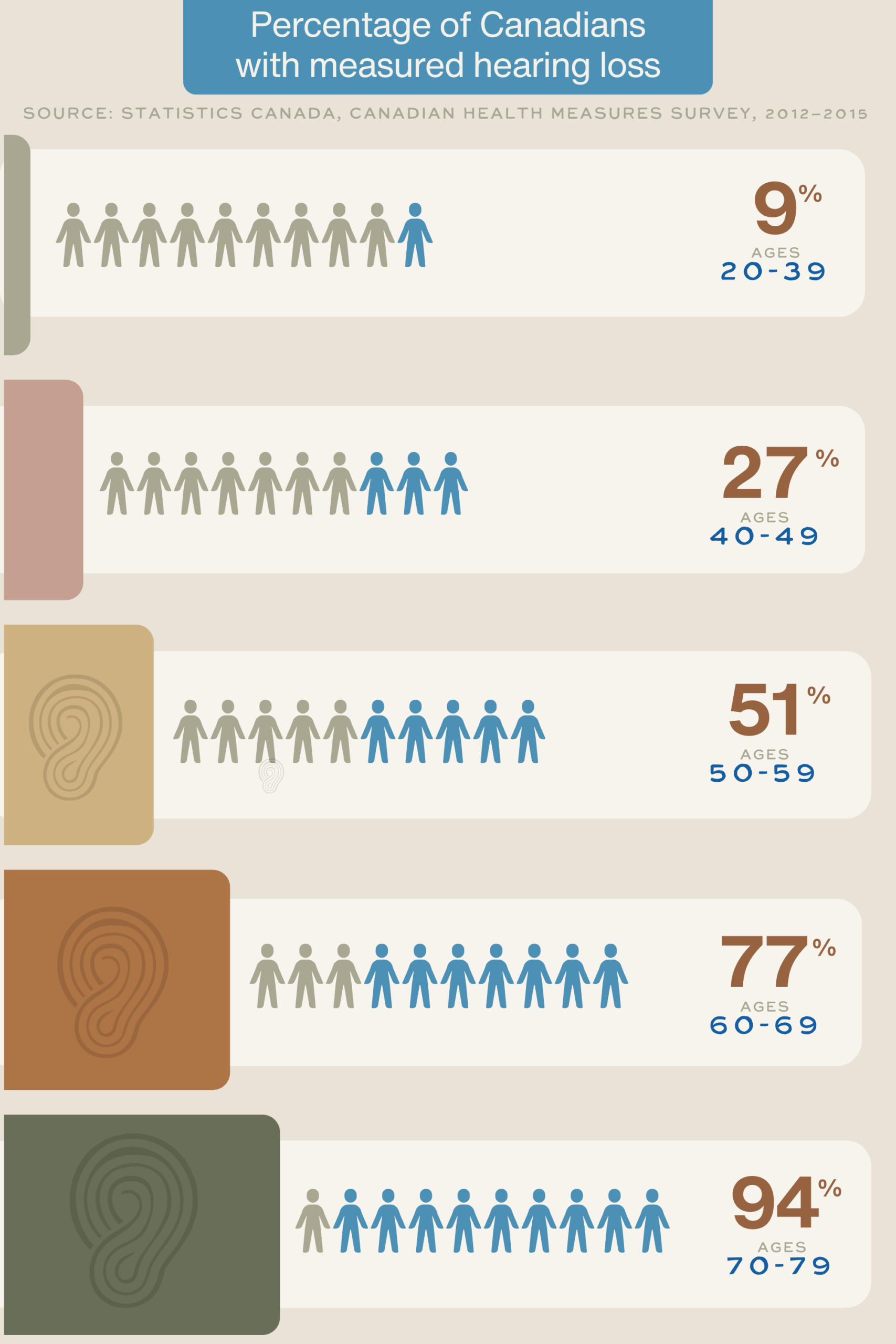
A hearing test with an independent audiologist can help determine whether listening effort is contributing to the fatigue, frustration, or withdrawal you’re experiencing in everyday life. It’s not a verdict. It’s just information about where your energy might actually be going.
When hearing is part of the picture, the right support can make conversations, work environments, and daily interaction feel significantly easier. Life stops requiring quite so much effort to stay connected to.
Meet Michelle & Steve
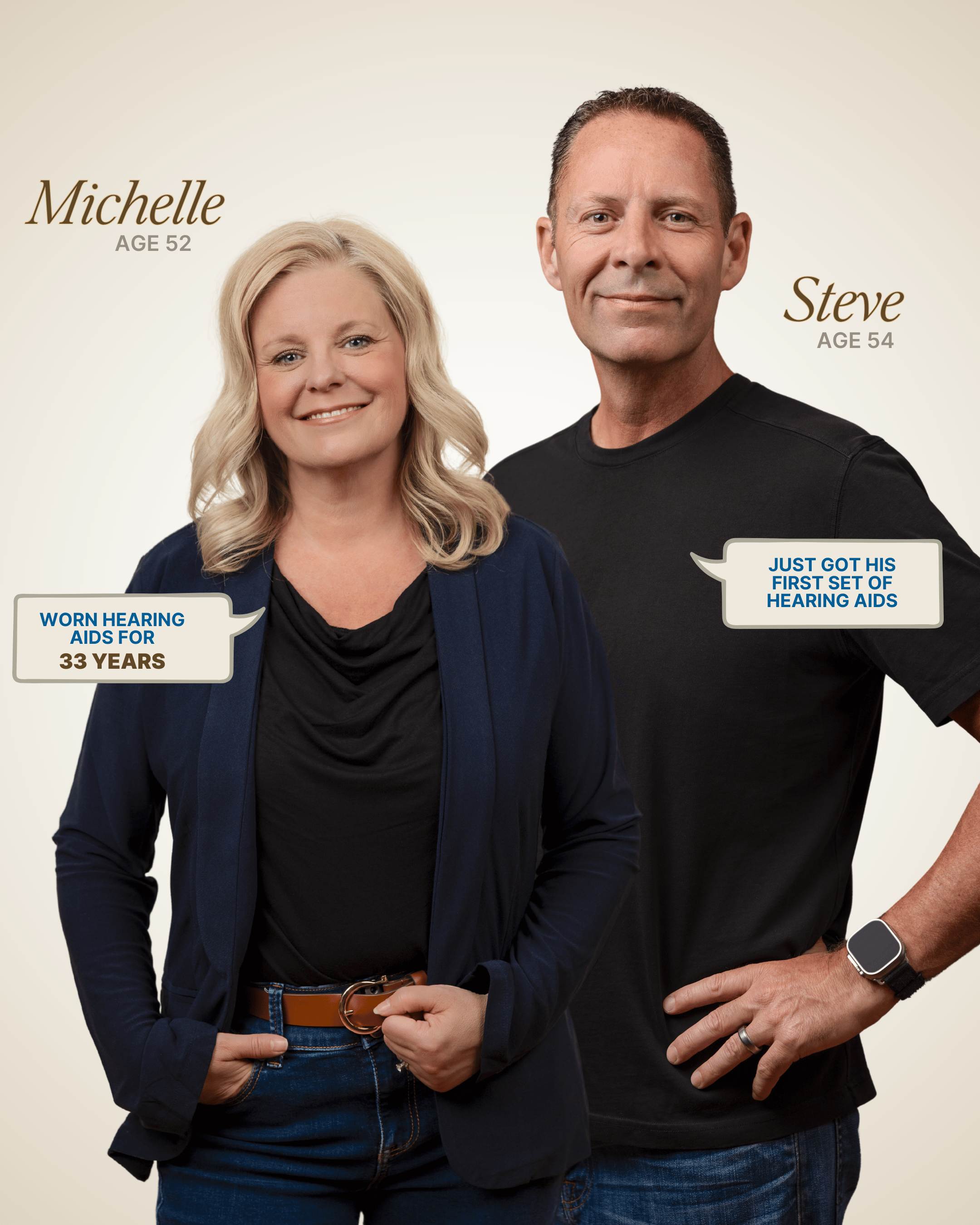
Michelle was born with hearing loss but wasn’t tested until high school. She got her first hearing aid at nineteen. Steve’s hearing changed more gradually. For years, he didn’t realize how much effort his brain was putting into following conversations, noisy rooms, meetings, restaurants, and everyday life.
Together, we’ve experienced how deeply hearing shapes energy, relationships, attention, confidence, and the feeling of staying connected to the people around you.
Meet Michelle & Steve
Our story begins with two different paths to one truth: hearing shapes everything.
Michelle was born with hearing loss but wasn’t tested until high school. She received her first hearing aid at nineteen. Steve lived for years without realizing he had hearing loss. His brain worked hard to fill in missing sounds, which turned listening into quiet effort.
Together, we’ve seen how good hearing care restores energy, connection, and ease.
Related Articles
SUBSCRIBE TO