

How Hearing Effort Turns Meetings Into Marathons
The meeting started twenty minutes ago and somehow we’re already tired.
Somebody near the speakerphone keeps tapping a pen against their coffee mug in a rhythm that becomes impossible to stop hearing once we notice it. One person at the far end of the table is speaking while looking down at printed spreadsheets, which means every fourth word disappears directly into the conference table. The air conditioner kicks on overhead with the soft steady roar of an airplane preparing for takeoff. Someone unwraps a protein bar as slowly and dramatically as if they’re trying to create suspense.
Meanwhile the conversation keeps moving.
A woman across from us says something everyone immediately laughs at and we miss the first half of it badly enough that by the time we piece together what happened, the room is already discussing quarterly projections.
Meetings have their own strange acoustics.
Glass walls. Hard tables. Chairs squeaking every time somebody shifts their weight. One person speaking too softly. Another somehow shouting despite sitting three feet away. Side conversations quietly branching off near the end of the table while somebody else keeps saying “sorry, go ahead” into a lagging Zoom connection that makes everybody sound slightly haunted.
And meeting conversation moves differently than ordinary conversation too.
Nobody finishes one thought before another starts. People interrupt each other constantly, although politely enough that corporate culture has decided this counts as collaboration. Someone jumps in with “just to add to that” while we’re still trying to process the original sentence from fifteen seconds ago.
By the time we fully catch one point, the room has already moved three topics ahead.
So a lot of us start adapting quietly.
- We begin watching faces more carefully than before because seeing the words helps hold onto them.
- We position ourselves strategically at the table without fully admitting to ourselves that we’re doing it.
- We study the agenda beforehand because context fills in gaps later.
- We start avoiding seats near the HVAC vent or the hallway or the guy who jingles the change in his pocket every time he crosses his legs.
Some meetings require so much concentration that our notes stop looking like notes and start looking like evidence collected after a minor accident.
- Half-finished sentences.
- Random numbers.
- Question marks beside words we couldn’t quite catch quickly enough.
- Arrows pointing nowhere.
And externally, we probably still look completely engaged.
We nod at appropriate intervals. We contribute when we can. We smile. We ask follow-up questions. Sometimes we leave meetings sounding articulate enough that nobody would ever guess how much work it took just to stay inside the conversation at all.
Because listening effort doesn’t always look dramatic from the outside. A lot of the time it just looks like somebody becoming slightly quieter over the years.
- A little less spontaneous.
- A little slower to jump into fast-moving discussions.
- A little more careful before speaking in group settings where missing one sentence can suddenly make the whole room feel slippery.
And there’s something strangely lonely about sitting in a meeting where everybody else seems to be moving at the speed of conversation while we’re still trying to assemble fragments into coherence half a beat behind them.
Especially because modern work keeps creating more environments like this.
- Open offices.
- Hybrid meetings.
- Speakerphones in echoing rooms.
- Video calls where one person sounds crystal clear and another sounds like they’re broadcasting live from inside a dishwasher.
Then we all pretend this is a normal way for human beings to communicate eight hours a day.
By the end of the meeting, the conference room table is covered in empty coffee cups and half-eaten muffins and pages of notes we can barely read back ourselves.
Someone says, “Okay, I think we’re in a good place.”
Everybody starts closing laptops.
Meanwhile we’re still trying to catch up to a conversation that ended three minutes ago.
When Listening Starts Requiring More Effort
Most hearing changes happen gradually. People usually notice the exhaustion before they notice the hearing itself.
Conversations get harder to follow when there’s background noise. Meetings feel disproportionately draining. Group settings require more concentration than they used to. By the end of the day, many people feel mentally overloaded without fully understanding why.
Because the shift happens slowly, it rarely feels obvious. People tend to blame stress, burnout, aging, introversion, distraction, poor sleep, or just the general weight of modern life. Sometimes those things are part of it. Sometimes the brain has simply been working much harder to keep up with sound than anyone realizes.
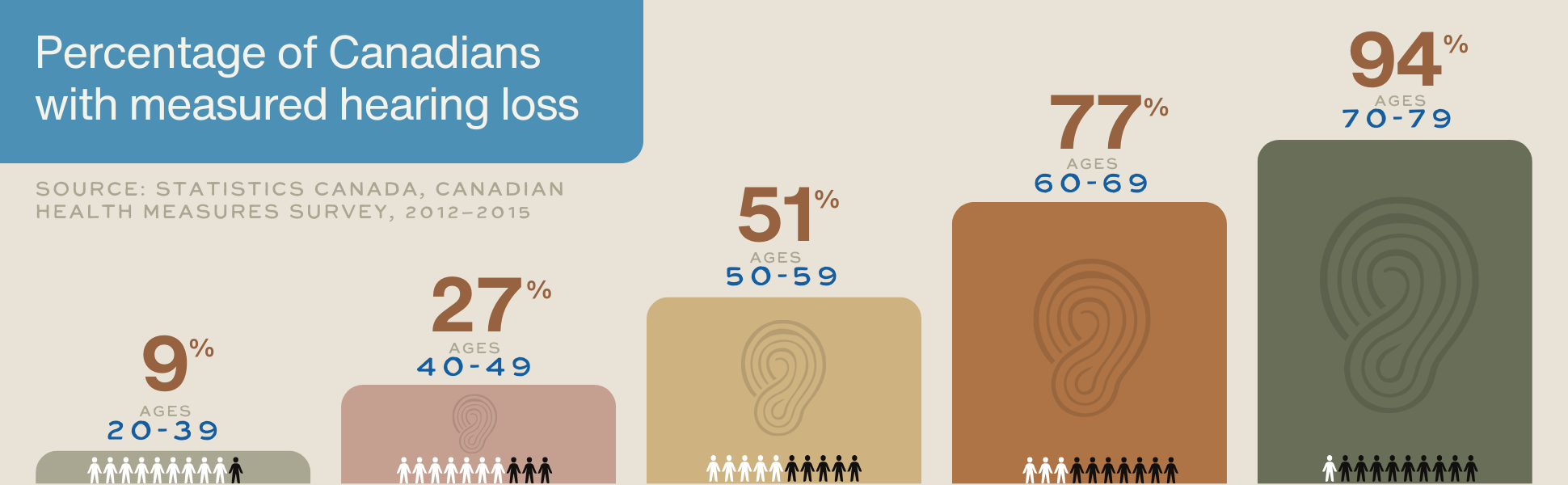
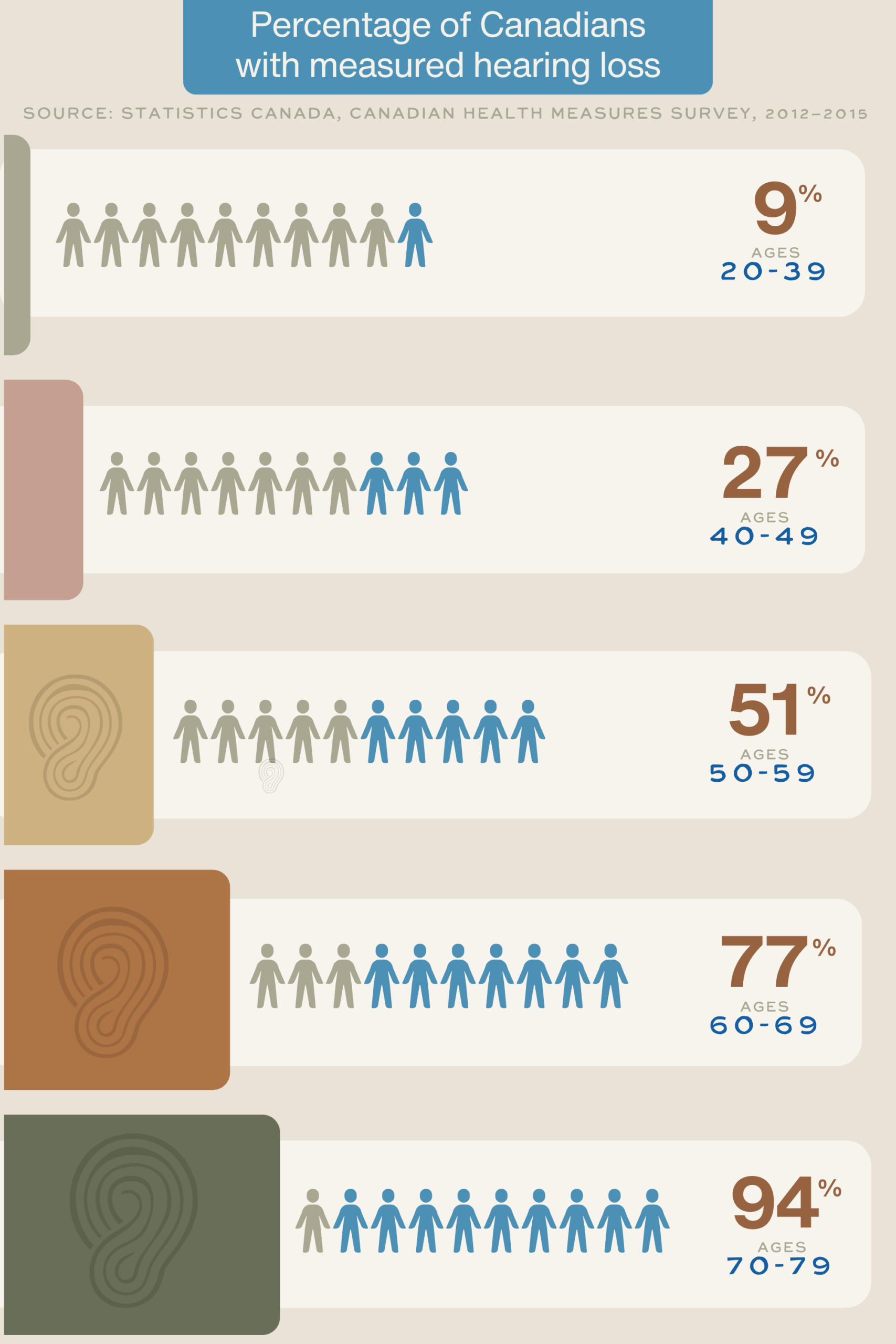
Hearing loss is more common than most people realize:
A hearing test with an independent audiologist can help determine whether listening effort is contributing to the fatigue, frustration, or withdrawal you’re experiencing in everyday life. It’s not a verdict. It’s just information about where your energy might actually be going.
When hearing is part of the picture, the right support can make conversations, work environments, and daily interaction feel significantly easier. Life stops requiring quite so much effort to stay connected to.
Meet Michelle & Steve
Michelle was born with hearing loss but wasn’t tested until high school. She got her first hearing aid at nineteen. Steve’s hearing changed more gradually. For years, he didn’t realize how much effort his brain was putting into following conversations, noisy rooms, meetings, restaurants, and everyday life.
Together, we’ve experienced how deeply hearing shapes energy, relationships, attention, confidence, and the feeling of staying connected to the people around you.

Meet Michelle & Steve
Our story begins with two different paths to one truth: hearing shapes everything.
Michelle was born with hearing loss but wasn’t tested until high school. She received her first hearing aid at nineteen. Steve lived for years without realizing he had hearing loss. His brain worked hard to fill in missing sounds, which turned listening into quiet effort.
Together, we’ve seen how good hearing care restores energy, connection, and ease.

Related Articles
SUBSCRIBE TO