

How We Use Humour to Hide Our Hearing Loss
You’ve gotten pretty good at laughing things off.
Someone says something across the table at dinner and you only catch enough of it to know everybody else found it funny, so you laugh too and hope your face looks like a person fully participating in the conversation instead of somebody rapidly trying to reconstruct missing information from tone, timing, and the expression on your sister-in-law’s face.
Usually it works.
If your response lands slightly sideways, there’s almost always a joke available quickly enough to smooth the whole thing over before anybody looks too closely.
“Apparently my brain left twenty minutes ago.”
“Sorry, I’m functioning at the intellectual level of a garden rake tonight.”
Everybody laughs again. The conversation keeps moving. Somebody reaches for the parmesan. Somebody starts telling another story. The moment disappears so cleanly that sometimes even we stop noticing what just happened.
After a while, a lot of us develop these little conversational instincts without fully realizing it. We become unusually good at reading rooms. Good at sensing emotional tone before we’ve completely caught the words themselves. Good at filling in gaps from context and timing and body language, especially in places where multiple conversations are happening at once and nobody wants to stop the entire table so one person can ask for the third repetition of the same sentence.
And because humor keeps everything socially comfortable, the adaptation can look a lot like personality from the outside.
People experience us as funny. Relaxed. Easygoing. Quick in conversation.
Meanwhile part of our attention is often somewhere else entirely, trying to keep track of what we missed, deciding whether it matters enough to clarify, calculating how risky it would be to guess correctly versus asking somebody to repeat themselves one more time while the whole table waits.
The effort becomes especially strange in group settings because conversation moves fast once people are comfortable with each other. Sentences overlap. Somebody starts talking before another person fully finishes. Half the room is laughing while somebody else is quietly asking where the salad dressing went. People answer questions while unloading dishes, facing cupboards, walking into other rooms. Families become fluent in fragments over time.
Most of the time we can hold onto enough of the conversation to stay inside it.
But there’s a difference between participating naturally and constantly recovering participation in real time, and after enough years the recovery work itself can become exhausting in ways that are hard to explain clearly to anybody else.
Especially because the humor genuinely is funny sometimes.
That’s part of what makes this complicated.
The jokes aren’t fake. The personality isn’t fake. A lot of people who develop these adaptations really are socially perceptive and funny and quick with language. Humor becomes useful partly because it already belongs to us naturally. It slips into the conversation easily enough that nobody notices it quietly covering moments of confusion or delay underneath.
And eventually the line between personality and compensation can get blurry even to us.
We leave dinners feeling much more tired than we expected to. We get home from social situations wanting silence immediately, even after spending time with people we genuinely love. Some of us start turning down noisier restaurants or larger gatherings without fully understanding why they suddenly feel like work.
Then we make another joke about getting old or losing our minds or needing more caffeine and the whole thing slides safely out of focus again.
The difficult thing about using humor to manage hearing strain is how effectively it protects us from embarrassment while also making it easier to avoid recognizing how much effort ordinary conversation has quietly started requiring.
When Listening Starts Requiring More Effort
Most hearing changes happen gradually. People usually notice the exhaustion before they notice the hearing itself.
Conversations get harder to follow when there’s background noise. Meetings feel disproportionately draining. Group settings require more concentration than they used to. By the end of the day, many people feel mentally overloaded without fully understanding why.
Because the shift happens slowly, it rarely feels obvious. People tend to blame stress, burnout, aging, introversion, distraction, poor sleep, or just the general weight of modern life. Sometimes those things are part of it. Sometimes the brain has simply been working much harder to keep up with sound than anyone realizes.
Hearing loss is more common than most people realize:
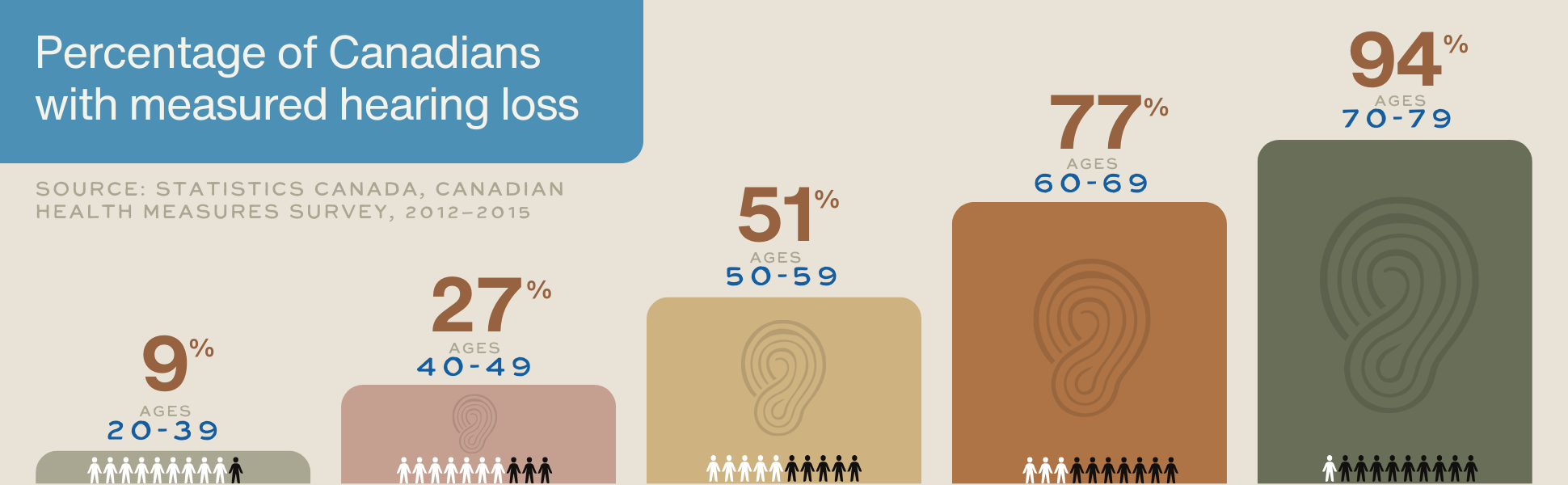
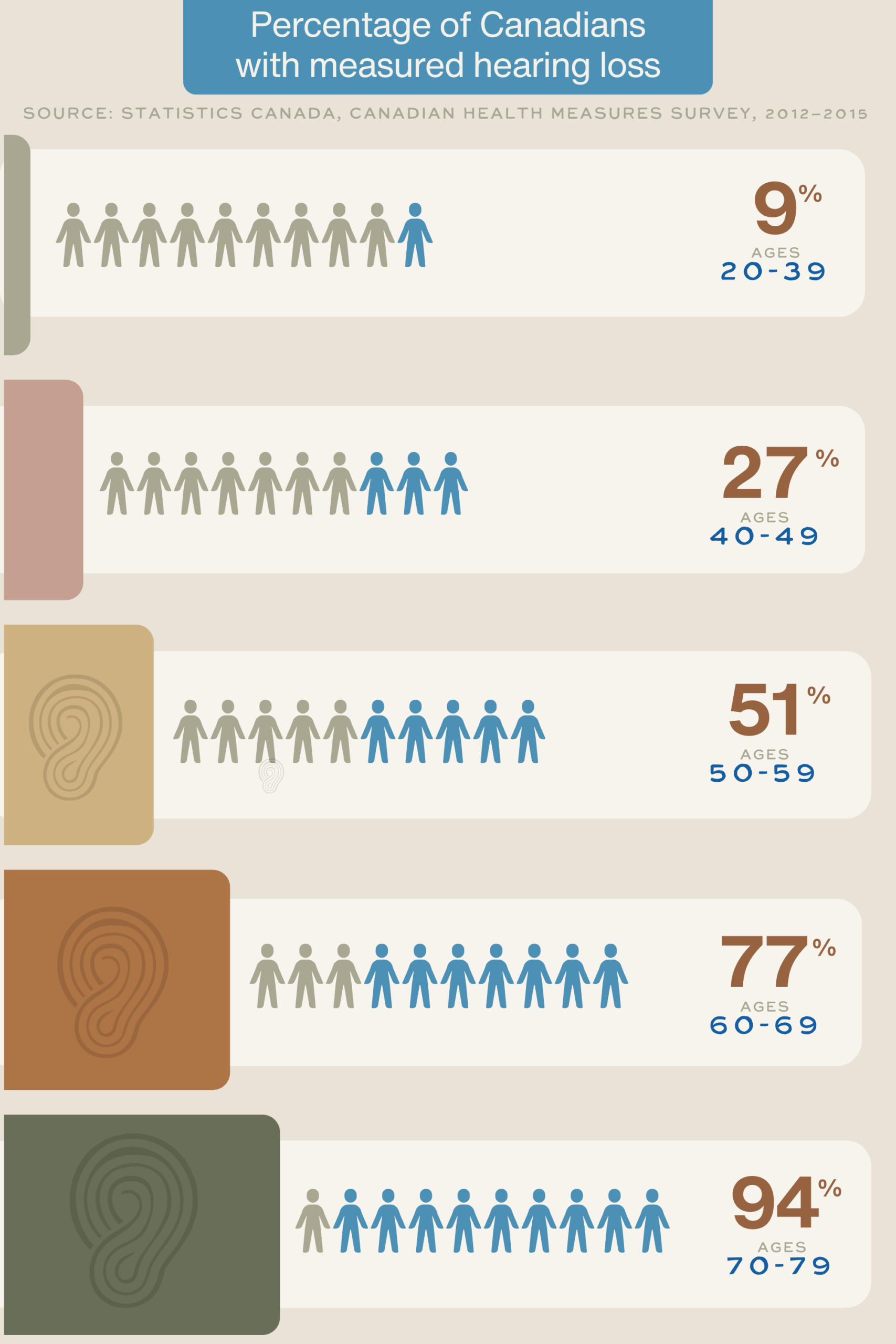
A hearing test with an independent audiologist can help determine whether listening effort is contributing to the fatigue, frustration, or withdrawal you’re experiencing in everyday life. It’s not a verdict. It’s just information about where your energy might actually be going.
When hearing is part of the picture, the right support can make conversations, work environments, and daily interaction feel significantly easier. Life stops requiring quite so much effort to stay connected to.
Meet Michelle & Steve
Michelle was born with hearing loss but wasn’t tested until high school. She got her first hearing aid at nineteen. Steve’s hearing changed more gradually. For years, he didn’t realize how much effort his brain was putting into following conversations, noisy rooms, meetings, restaurants, and everyday life.
Together, we’ve experienced how deeply hearing shapes energy, relationships, attention, confidence, and the feeling of staying connected to the people around you.

Meet Michelle & Steve
Our story begins with two different paths to one truth: hearing shapes everything.
Michelle was born with hearing loss but wasn’t tested until high school. She received her first hearing aid at nineteen. Steve lived for years without realizing he had hearing loss. His brain worked hard to fill in missing sounds, which turned listening into quiet effort.
Together, we’ve seen how good hearing care restores energy, connection, and ease.

Related Articles
SUBSCRIBE TO