

Hearing Strain Can Masquerade as Self-Doubt at Work
There’s a moment that happens in some meetings where somebody asks us a direct question and our brain goes completely blank for one terrifying second too long.
Not because we don’t know the answer.
Because we were still trying to process the last thing somebody else said.
The room goes quiet in that particular conference-room way where the silence somehow feels fluorescent. We can feel everyone waiting while our brain scrambles backward trying to reconstruct the conversation quickly enough to figure out what exactly we’re responding to.
Most of the time we recover fast enough that nobody notices.
We say something reasonably intelligent. We buy ourselves a few seconds with “Sorry, can you repeat the question?” We piece together enough context from the previous discussion that the interaction keeps moving normally.
Externally, the moment disappears almost immediately.
Internally, it can stay with us all day.
Especially at work, where competence often feels strangely fragile even when we’re objectively good at what we do.
A lot of workplace communication depends on speed more than people realize. Fast responses. Fast transitions between topics. Somebody references a conversation from last Thursday while asking a question halfway through sitting down. Someone throws out an idea while walking past our desk already physically moving toward the next thing before we’ve fully processed the sentence.
And hearing strain rarely arrives as one dramatic moment where everything suddenly becomes impossible to understand.
More often it shows up as uncertainty.
We start second-guessing whether we caught things correctly. We hesitate before responding because we’re still mentally checking if we missed part of the sentence. We begin relying more heavily on context, tone, facial expression, follow-up emails, whatever helps fill in the pieces that arrived incomplete the first time around.
Then something subtle starts happening psychologically.
The confidence erosion can feel like a competence problem when it might actually be an effort problem.
We wonder whether we’re becoming less sharp lately. Less focused. Less confident in meetings. We notice ourselves contributing less spontaneously during group discussions because jumping into fast-moving conversation starts carrying slightly more risk than it used to. Sometimes we stay quiet not because we don’t have anything to say, but because we’re still assembling the conversation internally while everybody else has already moved forward.
After a while, many of us stop trusting our own processing speed in situations that are actually asking our brains to work much harder than anybody around us realizes.
And because the strain builds gradually, it can become surprisingly difficult to separate the actual problem from the story we start telling ourselves about the problem.
- Maybe we’re overwhelmed.
- Maybe we’re distracted.
- Maybe we’re losing confidence professionally.
- Maybe everybody else is handling this more easily.
Meanwhile we’re spending enormous amounts of mental energy trying to keep conversations coherent and complete in real time while making sure nobody notices we’re doing it.
There’s something painful about quietly questioning your own competence while still functioning well enough that nobody around you sees the effort underneath it.
Especially because many people adapt so effectively outwardly that the strain becomes almost completely invisible.
- We prepare more carefully before meetings.
- We reread emails multiple times before responding.
- We choose seats strategically at dinners or conferences without fully thinking about why.
- Some of us become extremely organized simply because structure helps reduce the amount of information we have to hold together mentally in real time.
And sometimes what looks externally like insecurity is actually the exhaustion of trying to keep pace inside conversations that have quietly become harder to follow than they used to be.
The difficult thing about hearing strain at work is that it doesn’t always announce itself through missed words.
Sometimes it arrives as self-doubt years before anybody recognizes what’s actually happening.
When Listening Starts Requiring More Effort
Most hearing changes happen gradually. People usually notice the exhaustion before they notice the hearing itself.
Conversations get harder to follow when there’s background noise. Meetings feel disproportionately draining. Group settings require more concentration than they used to. By the end of the day, many people feel mentally overloaded without fully understanding why.
Because the shift happens slowly, it rarely feels obvious. People tend to blame stress, burnout, aging, introversion, distraction, poor sleep, or just the general weight of modern life. Sometimes those things are part of it. Sometimes the brain has simply been working much harder to keep up with sound than anyone realizes.
Hearing loss is more common than most people realize:
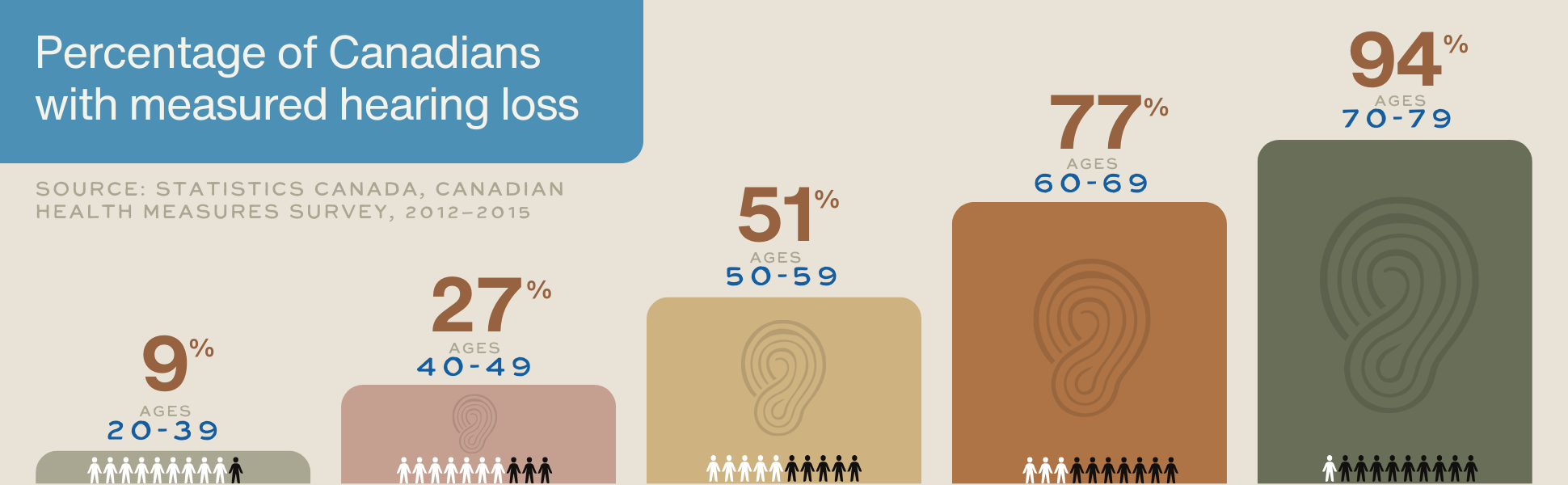
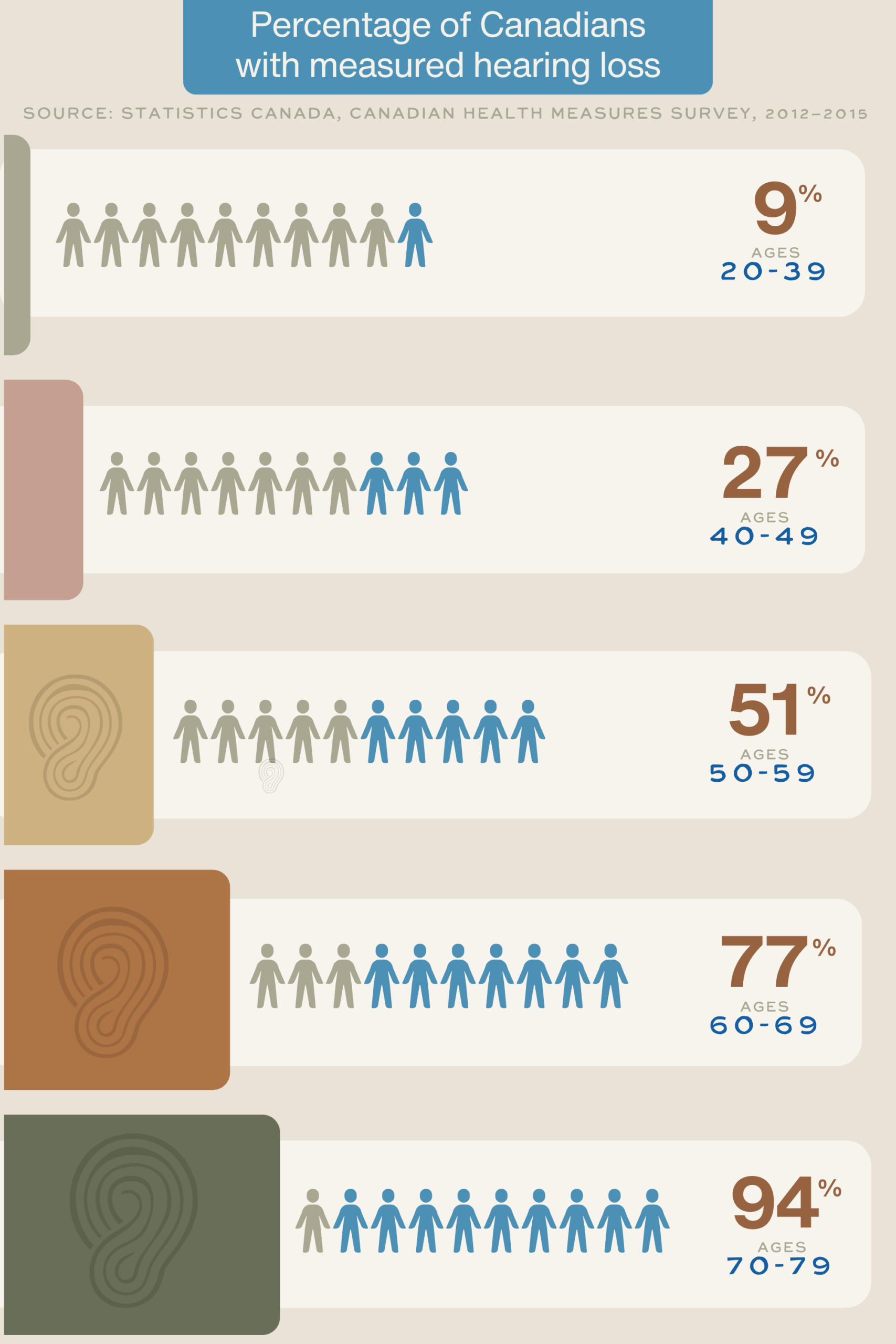
A hearing test with an independent audiologist can help determine whether listening effort is contributing to the fatigue, frustration, or withdrawal you’re experiencing in everyday life. It’s not a verdict. It’s just information about where your energy might actually be going.
When hearing is part of the picture, the right support can make conversations, work environments, and daily interaction feel significantly easier. Life stops requiring quite so much effort to stay connected to.
Meet Michelle & Steve
Michelle was born with hearing loss but wasn’t tested until high school. She got her first hearing aid at nineteen. Steve’s hearing changed more gradually. For years, he didn’t realize how much effort his brain was putting into following conversations, noisy rooms, meetings, restaurants, and everyday life.
Together, we’ve experienced how deeply hearing shapes energy, relationships, attention, confidence, and the feeling of staying connected to the people around you.

Meet Michelle & Steve
Our story begins with two different paths to one truth: hearing shapes everything.
Michelle was born with hearing loss but wasn’t tested until high school. She received her first hearing aid at nineteen. Steve lived for years without realizing he had hearing loss. His brain worked hard to fill in missing sounds, which turned listening into quiet effort.
Together, we’ve seen how good hearing care restores energy, connection, and ease.

Related Articles
SUBSCRIBE TO