
Hearing Strain Can Masquerade as Self-Doubt at Work
You’ve been good at your job for years. You know what you’re doing. You’ve built credibility, earned respect, developed expertise that people rely on. And lately, something has shifted. Not in your actual competence, but in how confident you feel showing up to do the work.
It started with small moments. A meeting where you didn’t catch an important detail and had to ask someone to clarify later. A phone call where you missed the client’s question and had to guess at what they were asking. A presentation where someone asked a follow-up and you weren’t entirely sure what they’d said, so you gave an answer that was close but not quite on target.
None of these moments were disasters. You recovered. You figured it out. But each one left a residue of doubt that you can’t quite shake. You start second-guessing yourself in situations where you used to feel certain. You hesitate before speaking up in meetings. You replay conversations afterward, wondering if you missed something important. You feel a low hum of anxiety that wasn’t there before, and it’s eating away at the ease you used to bring to your work.
What’s particularly hard about this is that no one else seems to notice. Your performance reviews are still fine. Your boss hasn’t said anything. Your colleagues still come to you with questions. From the outside, you probably look like the same competent professional you’ve always been. But inside, you’re working twice as hard to maintain that appearance, and the effort is exhausting.
Professional confidence can erode for many reasons.
Workplace dynamics shift. Burnout accumulates. Anxiety builds. Health changes in ways that affect focus or energy or how we show up. What’s worth paying attention to is when the erosion doesn’t match what you know about yourself and your actual capabilities. When you’re still good at what you do, but something about doing it has gotten harder in ways you can’t quite name.

Here’s one thing that might be happening underneath: you’re missing things. Small things, usually. A name mentioned in a meeting. A number someone rattled off. A question asked while you were still processing the previous point. Your brain might be working overtime to fill in the gaps, to use context to reconstruct what you didn’t quite catch, to stay oriented in conversations that are moving faster than you can comfortably follow.
When your hearing is functioning easily, this happens automatically. You catch everything the first time, mostly. You track multiple speakers without effort. You follow the thread of a discussion even when it moves quickly or people talk over each other. Your cognitive bandwidth is available for thinking, analyzing, contributing at the level you’re known for.
When your hearing is working harder, though, a significant portion of that bandwidth can get redirected toward just tracking what’s being said. You might be working to hear clearly, to separate one voice from another in a conference room, to catch what’s being said on a call when the audio isn’t great, to follow along when someone’s speaking quickly or quietly or from across the table. That work is invisible to everyone else, but it takes energy you used to have available for the actual substance of your job.
The result is that you feel slower. Less sharp. Like you’re half a step behind when you used to be half a step ahead. You’re spending so much effort just staying oriented that you have less left over for the strategic thinking, the quick responses, the insightful questions that used to come naturally. And because you can’t point to a specific reason for this shift, you start to believe the problem is you. Maybe you’re losing your edge. Maybe this is what it looks like when you start to age out of being able to keep up.
There’s also the anxiety that comes with not trusting yourself to catch everything. You start preparing more for meetings than you used to, not because you don’t know the material, but because you’re afraid of being caught off guard by something you didn’t hear clearly. You avoid situations where you might be put on the spot. You let other people take the lead in conversations where you used to be the one driving things forward. You’re managing your exposure to risk, and in the process, you’re making yourself smaller and quieter in professional spaces where you used to take up room with confidence.
What makes this particularly damaging is that confidence is part of how professional credibility works. People trust you not just because you’re competent, but because you project certainty. You speak up. You make decisions. You weigh in without hesitation. When that confidence starts to erode, even if your actual competence hasn’t changed, people start to read you differently. They might not be able to name what’s different, but they sense it. And once they sense it, opportunities may start going to other people. The projects you would have led. The meetings where your input would have mattered. The moments where your voice would have shaped the direction of something important.
You might not even realize this is happening until it’s already happened. Until you notice you’re not being pulled into strategic conversations the way you used to be. Until a junior colleague gets tapped for something you would have been the obvious choice for a year ago. Until you realize you’ve been quietly sidelined in ways that are hard to name but impossible to ignore.
Here’s what’s worth knowing: if the confidence erosion is connected to missing details in conversations, to working harder to track what’s being said, to feeling like you’re expending effort just to stay oriented in meetings and calls, hearing might be part of what’s happening.
Most people are already compensating for hearing shifts years before they recognize what’s driving the professional self-doubt that’s crept in. The confidence erosion can feel like a competence problem when it might actually be an effort problem.
Hearing affects ALL ages:
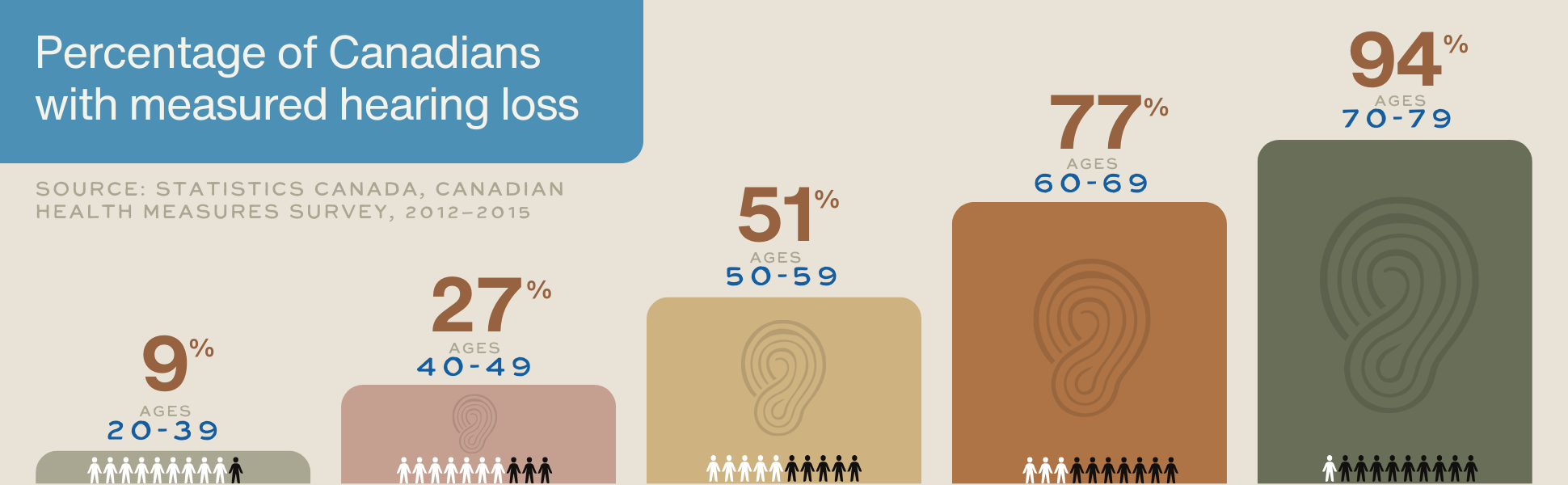
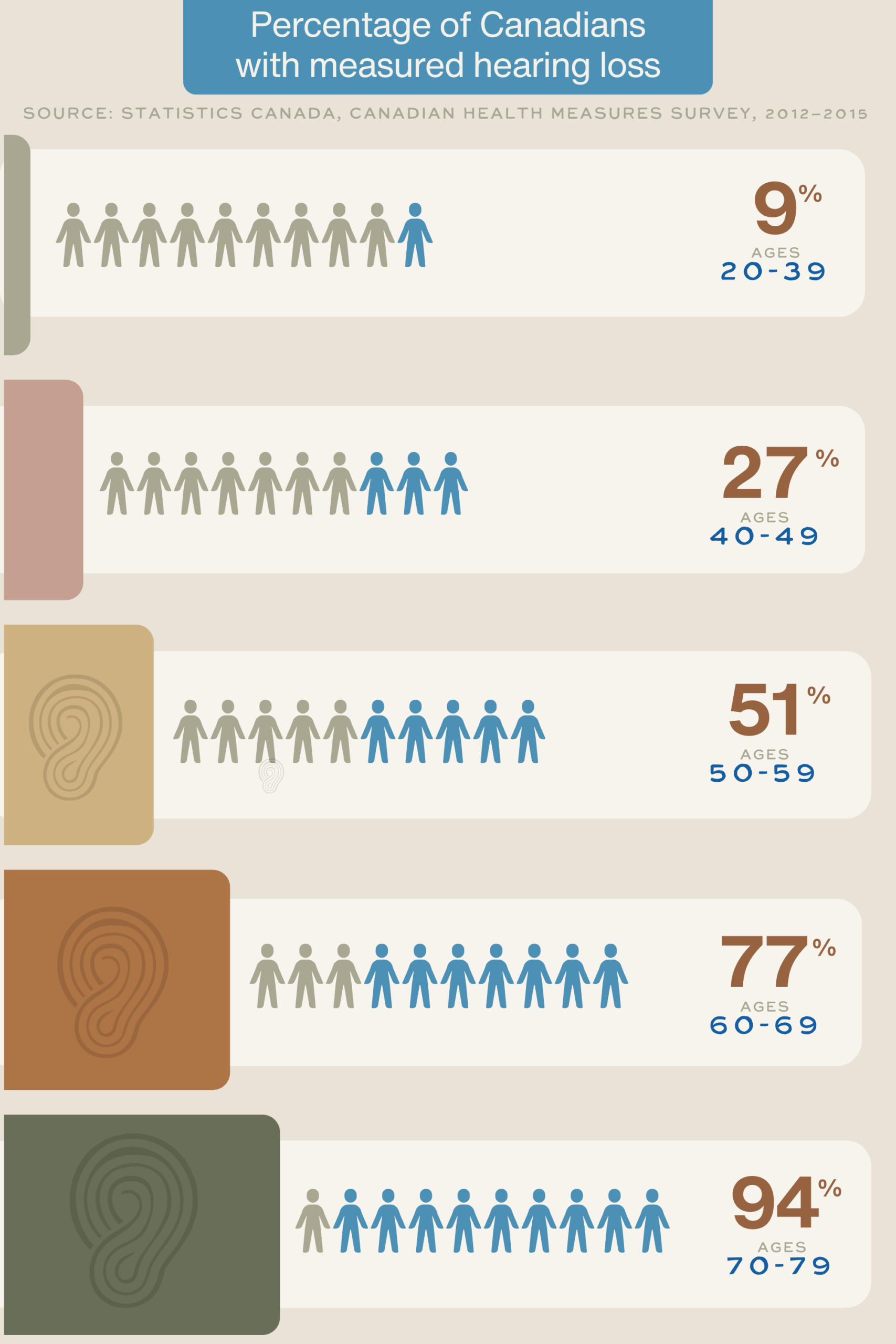
A hearing test with an independent audiologist can show you whether hearing is contributing to why work feels harder and your confidence has taken a hit. It’s information, not a judgment. And if it turns out hearing is part of the picture, there’s a tool that restores the professional ease you remember having.
If you get tested and your hearing is fine, that’s valuable information too. It tells you to look elsewhere for what’s shifting – whether that’s stress, burnout, a health change that needs attention, or something about the work environment itself. Either way, you’ll have clarity instead of just self-doubt.
Hearing aids are one of the most underestimated tools of midlife.
They’re small, discreet, and honestly kind of hip now. More importantly, they help you catch details in meetings without straining, follow rapid-fire discussions without falling behind, participate in calls with clarity, and show up to your work with the kind of confidence that comes from knowing you’re not missing anything important.
That’s what Empowerful™ tools do. They expand capacity. They protect presence. They help you stay fully engaged in the life you already have. You don’t have to keep second-guessing yourself. And you don’t have to let the erosion of confidence cost you opportunities you’ve earned. Your competence hasn’t changed. The tool exists to help you show it.
Meet Michelle & Steve
Our story begins with two different paths to one truth: hearing shapes everything.
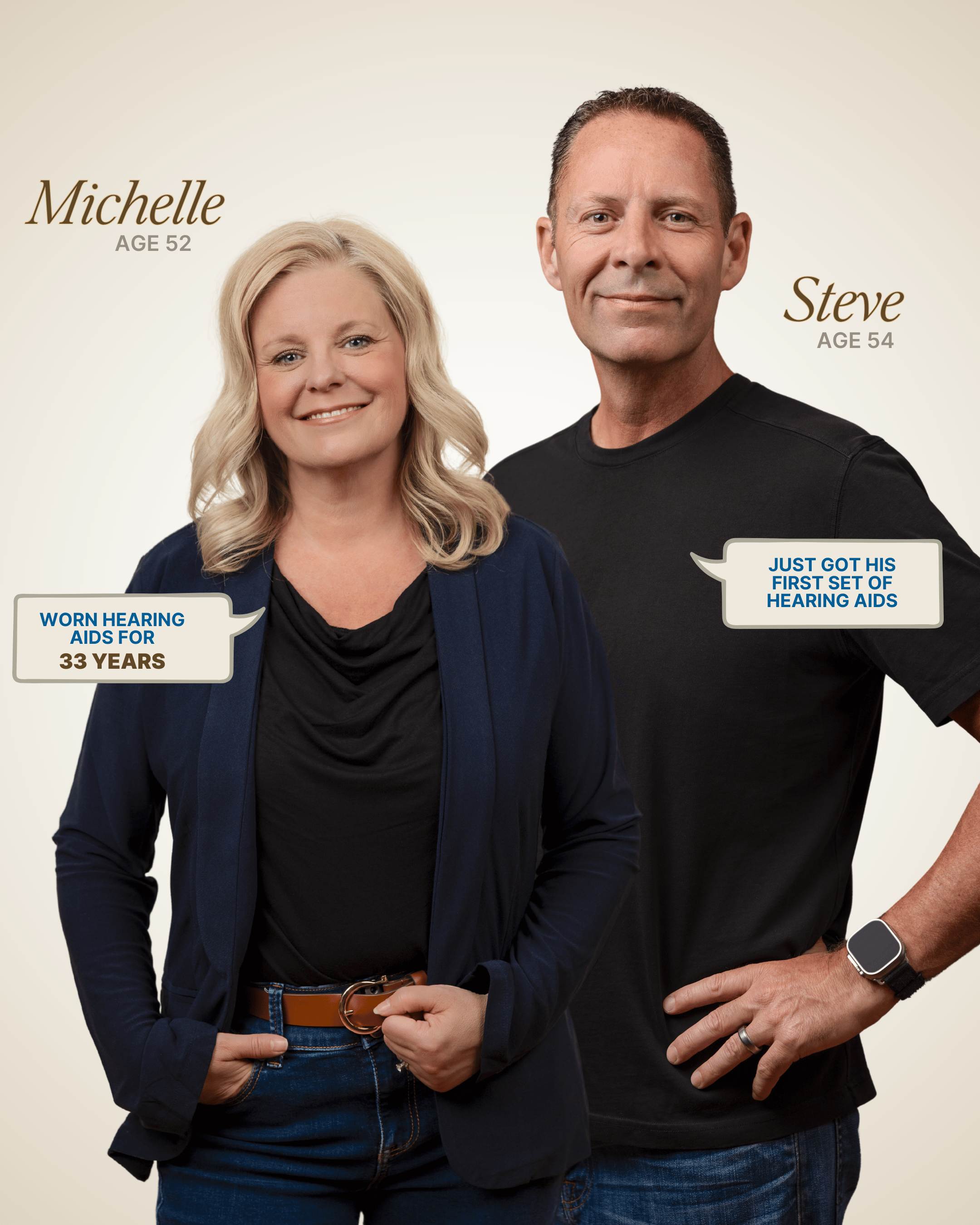
Michelle was born with hearing loss but wasn’t tested until high school. She received her first hearing aid at nineteen. Steve lived for years without realizing he had hearing loss. His brain worked hard to fill in missing sounds, which turned listening into quiet effort.
Together, we’ve seen how good hearing care restores energy, connection, and ease.
Meet Michelle & Steve
Our story begins with two different paths to one truth: hearing shapes everything.
Michelle was born with hearing loss but wasn’t tested until high school. She received her first hearing aid at nineteen. Steve lived for years without realizing he had hearing loss. His brain worked hard to fill in missing sounds, which turned listening into quiet effort.
Together, we’ve seen how good hearing care restores energy, connection, and ease.
Related Articles
SUBSCRIBE TO