
What Open Offices Ask of Your Brain All Day Long
You used to be fine in open offices. Not thrilled, but fine. You could focus when you needed to, tune out the background noise, and get your work done without feeling like the room was actively trying to destroy you.
Now? The same space feels impossible.
You leave at the end of the day completely wrecked. Not from the work itself – from just being there. From existing in that space for eight hours while your brain tried to do approximately seventeen things at once.
The Noise Never Stops
Conversations three desks over. Someone on a call. Keyboards clicking. Chairs rolling. The air conditioning humming. Footsteps. Laughter. That person who eats crunchy snacks at 2pm every single day.
A dozen different inputs competing for your attention all day long, and your brain trying to sort through all of it while also trying to do your actual job.
Why Everything Takes Longer Now
It’s not that you can’t work. You’re still getting things done. What’s changed is how much it costs.
Tasks that used to take an hour now take two because you’re constantly pulling your attention back from the noise. Meetings that used to feel manageable now leave you drained because you’re working harder just to follow what’s being said. By mid-afternoon, you’re already running on fumes and you still have three more hours.
Everyone Else Seems Fine
At first you think it’s just open offices – they’re terrible for everyone, right?
Except your coworkers seem fine. They’re having conversations, taking calls, moving through their day without looking like they’re barely holding it together.
You’re the one who’s struggling, and that makes you wonder if maybe the problem is you.
It’s not.

What’s Actually Happening
Your brain is working harder than it used to to filter and process the sensory load of that space.
When your senses are working easily, background noise stays in the background. Your hearing automatically separates relevant sound from irrelevant sound. You can focus on the task in front of you while the office hum fades into something you barely notice.
When your senses are working harder? That automatic filtering becomes manual effort.
Your brain has a harder time separating the conversation you need to focus on from everything else happening around you. Background noise competes with the foreground, and your brain works constantly to sort signal from noise, to stay oriented, to keep you focused while managing everything else coming at you.
And here’s the wild part: you have no idea your brain is doing this.
You just know you’re absolutely wrecked by 3pm and all you did was answer emails.
Hearing Plays a Bigger Role Than You Think
When hearing shifts – even slightly – environments with competing sound sources become significantly harder to navigate.
Your brain works overtime to pick out the voice you’re listening for while filtering nearby conversations. It compensates for words it didn’t catch clearly, filling in gaps and guessing at meaning. It stays on high alert in a space where sound comes from multiple directions, and that constant vigilance burns energy you don’t realize you’re spending.
The open office amplifies all of this. It’s designed to maximize collaboration and minimize barriers, which also means it maximizes sensory input and minimizes your ability to control any of it. There’s no door to close. No way to turn down the volume. No escape from the steady stream of sound your brain is processing all day long.
You Can’t Point to One Thing
What makes this particularly hard is that you can’t point to one specific thing that’s draining you. It’s the cumulative load of managing everything at once, for hours, without a break.
Because the load is invisible and the effort is automatic, it’s hard to explain why you’re so tired. You just are.
So you start working around it. Noise-canceling headphones become non-negotiable. You’re booking conference rooms just to think. You show up at 7am when the office is still quiet because that’s the only time your brain actually works. You avoid the kitchen during lunch. You manage the environment constantly because your body is already managing more than it used to.
Why Working From Home Feels Completely Different
Working from home often feels like a different life.
The same tasks feel manageable. You finish the day with energy left instead of needing to collapse on the couch. The contrast is so stark it’s almost confusing.
That difference isn’t about the work. It’s about the environment and what it asks of your body and brain all day long.
And if that gap keeps getting wider – if the office keeps getting harder while home keeps feeling easier – it might be worth paying attention to what your senses are telling you.
The stats on how many people have hearing loss are striking:
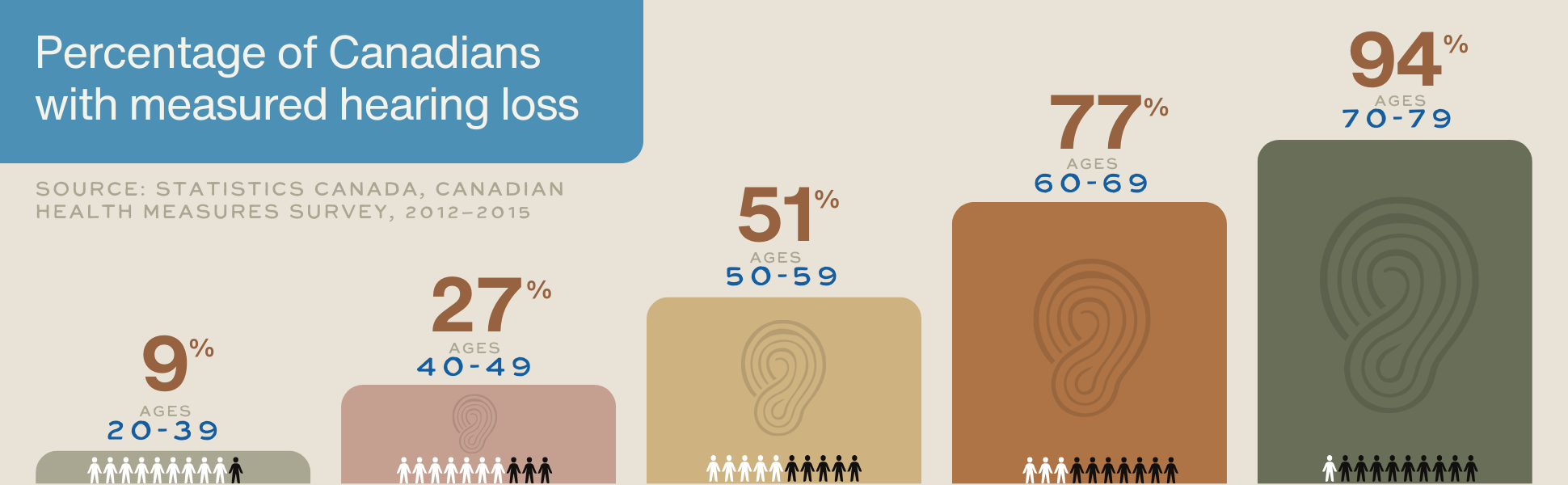
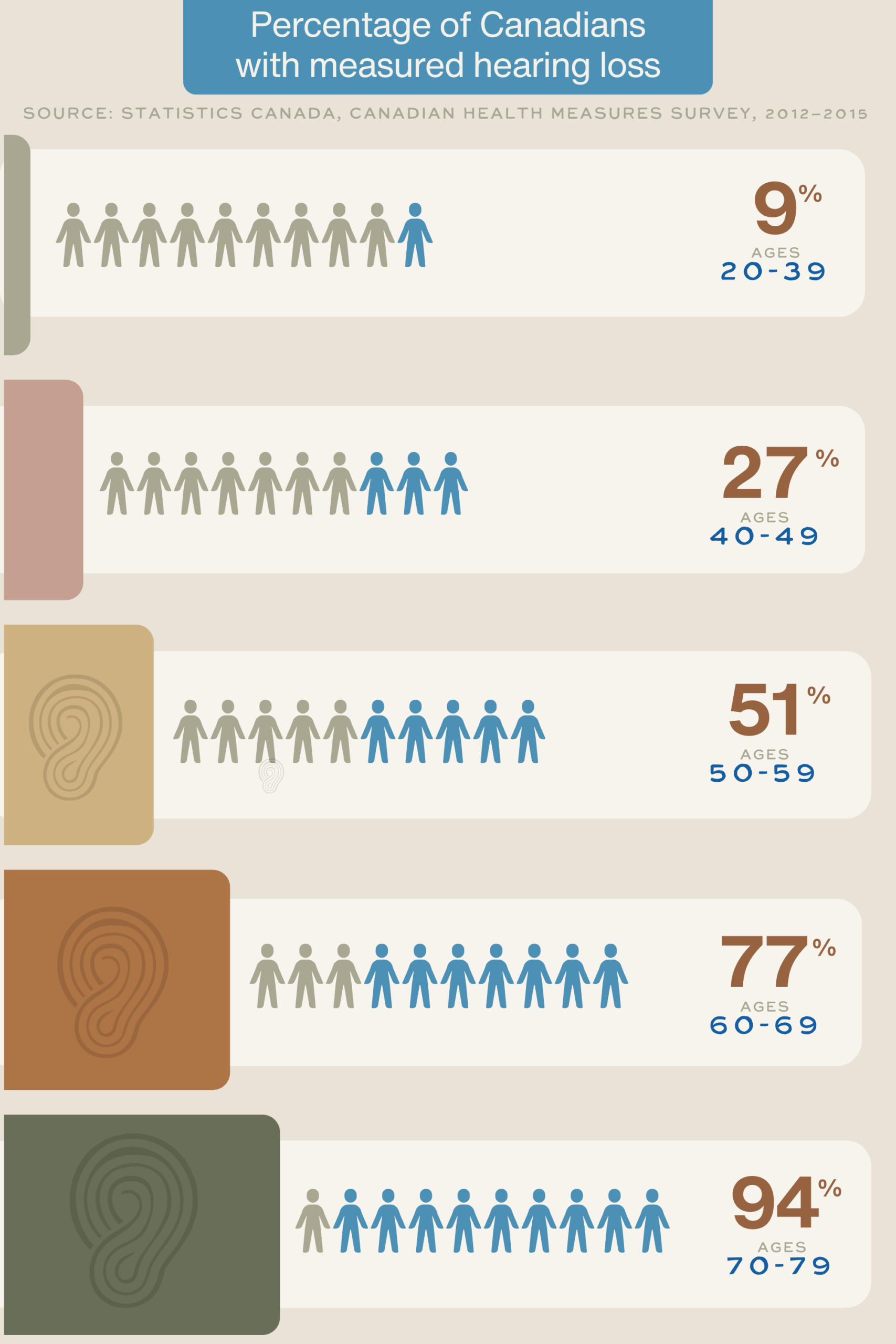
Most people are already compensating for hearing shifts years before they realize hearing is part of what’s making open offices feel impossible. The exhaustion feels like a focus problem or an environmental sensitivity when it’s actually an effort problem, and effort can be addressed.
A hearing test with an independent audiologist can show you whether hearing is contributing to why the open office now drains you in ways it didn’t used to. And if hearing is part of the picture, there’s a tool that changes how you move through these spaces entirely.
Hearing aids are one of the most underestimated tools of midlife.
They’re small, discreet, and honestly kind of hip now. More importantly, they help you filter competing sound sources, stay focused in noisy environments without burning through your reserves, and move through your workday with the kind of ease that leaves you with energy for your actual life after work.
The right tool doesn’t just help you manage. It gives you room to move, energy to spare, and presence that feels like yours again. You don’t have to keep white-knuckling your way through the workday. And you don’t have to keep wondering why everyone else seems fine while you’re barely holding it together.
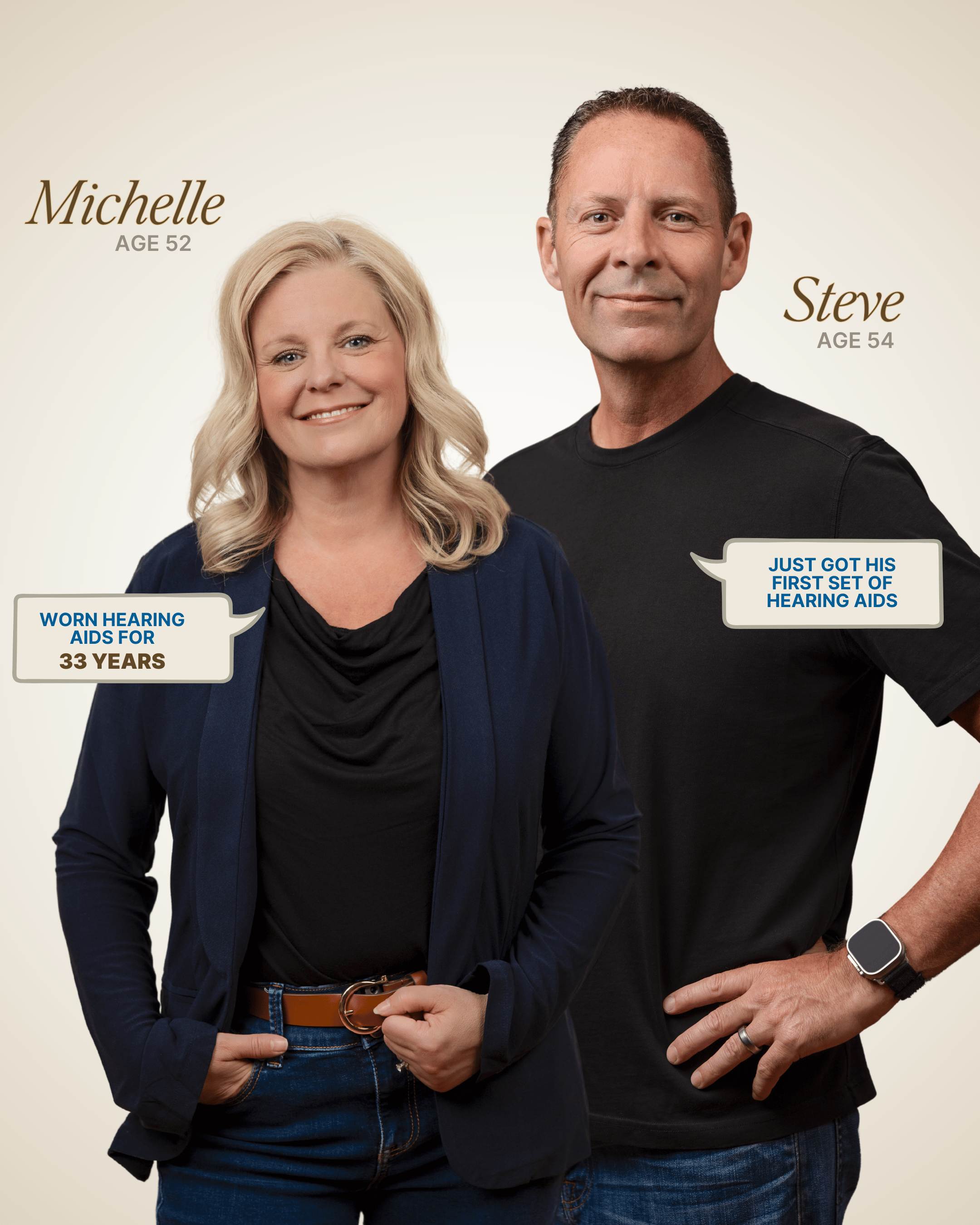
Meet Michelle & Steve
Our story begins with two different paths to one truth: hearing shapes everything.
Michelle was born with hearing loss but wasn’t tested until high school. She received her first hearing aid at nineteen. Steve lived for years without realizing he had hearing loss. His brain worked hard to fill in missing sounds, which turned listening into quiet effort.
Together, we’ve seen how good hearing care restores energy, connection, and ease.
Meet Michelle & Steve
Our story begins with two different paths to one truth: hearing shapes everything.
Michelle was born with hearing loss but wasn’t tested until high school. She received her first hearing aid at nineteen. Steve lived for years without realizing he had hearing loss. His brain worked hard to fill in missing sounds, which turned listening into quiet effort.
Together, we’ve seen how good hearing care restores energy, connection, and ease.

Related Articles
SUBSCRIBE TO