
When Your Partner Notices Before You Do
They said something to you a few months ago, casually, in passing. “I think you might want to get your hearing checked.”
You brushed it off. You’re fine. You hear fine. Sure, sometimes you miss things, but everyone does. The TV volume is loud because the sound mixing on shows is terrible now. You ask people to repeat themselves because they mumble or talk too quietly. It’s not you. It’s everyone else.
But they keep noticing things you don’t think you’re doing. They point out that you’ve asked them to repeat themselves three times in one conversation. They mention that you’ve turned the car radio up louder than it used to be. They start raising their voice slightly when they talk to you, and you hate that you can hear the difference. You hate that they’re accommodating something you haven’t even admitted is happening.
The Discomfort of Being Seen
What makes this particularly hard is the feeling of being seen in a way you’re not ready to be seen. Your partner is noticing a shift you’ve been working hard not to notice yourself. They’re naming something you’ve been explaining away, compensating for, managing around. And now that they’ve said it out loud, you can’t unknow it.
So you get defensive. You tell them they’re wrong. You point out all the times you hear perfectly fine. You explain why the situations they’re talking about aren’t actually about your hearing—the restaurant was too loud, the person on the phone had a bad connection, you were distracted. You have reasons for everything, and those reasons let you avoid the possibility that they might be right about something you’re not ready to face.
Here’s what’s often true underneath the defensiveness: you already know. Not consciously, maybe. But some part of you has noticed the same things they’re noticing. You’ve just been working very hard not to let that awareness surface.

What Your Partner Is Actually Seeing
Your partner doesn’t have the same investment in your denial. They’re watching you work harder than you used to. They’re seeing you struggle in ways you don’t think you’re struggling. They’re noticing the moments when you miss what someone said, when you nod along without fully tracking, when you laugh because everyone else is laughing but they can tell you didn’t catch the joke. And because they love you, because they’re worried, they say something. And because you’re not ready to hear it, you push back.
This creates a dynamic that’s hard on both of you. They feel like they’re watching you navigate the world with more effort than you realize. You feel like they’re criticizing you, doubting your perception, making you feel diminished or incapable. The hearing issue itself becomes less about hearing and more about the relational tension it’s creating.
There’s also the ego blow of someone else noticing a vulnerability before you’re ready to name it yourself. It feels infantilizing. Like they’re parenting you or managing you instead of being your partner. You don’t want to be someone who needs to be told what’s happening with their own body. You don’t want to be someone whose partner has to accommodate them or speak louder or repeat themselves constantly. So you resist the framing, even when part of you knows they might be right.
They’re Probably Right
Here’s what’s worth considering: your partner isn’t noticing this because they’re looking for problems. They’re noticing because they’re close enough to see patterns you can’t see from the inside. They’re watching you work harder than you realize you’re working. And they’re saying something because they care, not because they want to diminish you.
But here’s the thing: your partner is probably right. And you probably already know they’re right. The question is whether you’re willing to act on that knowledge before the denial costs you more than it’s protecting you from.
The stats on this are striking:
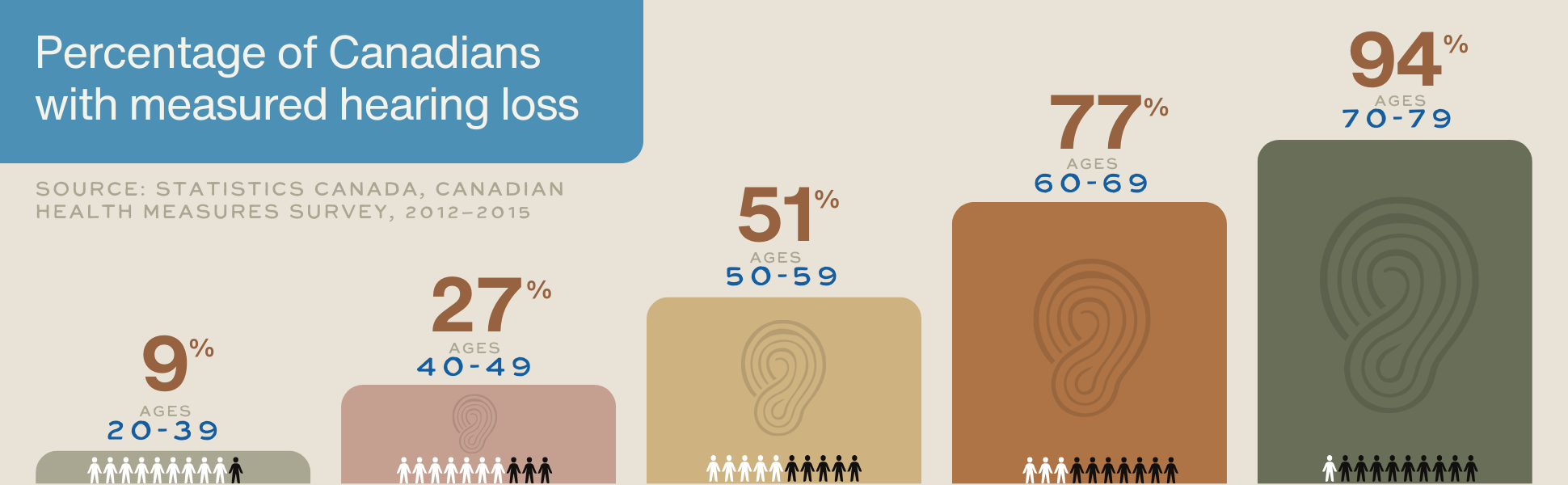
Hearing shifts are incredibly common, and they happen gradually enough that the person experiencing them is often the last to fully acknowledge what’s happening. Partners, though, see it clearly. They’re on the outside watching the effort accumulate, watching someone they love work harder than they need to.
What Clarity Actually Looks Like
A hearing test with an independent audiologist can give you information that settles the question. Either your hearing has shifted and you’ll know what you’re working with, or it hasn’t and your partner will have to look elsewhere for what they’re noticing. Either way, you’ll have clarity instead of ongoing tension.
And if it turns out your partner is right, if your hearing has shifted, there’s a tool that addresses it directly. A tool that means you don’t have to keep defending yourself or explaining away what they’re seeing. A tool that restores ease for both of you.
Hearing aids are one of the most underestimated tools of midlife.
They’re small, discreet, and honestly kind of hip now. More importantly, they eliminate the friction that’s been building in your relationship around this issue. They let you hear your partner clearly the first time they say something. They give both of you back the ease of communication you used to have before this became a point of tension.
That’s what Empowerful™ tools do. They expand capacity. They protect presence. They help you stay fully engaged in the life you already have. Your partner noticed something real. That doesn’t make you diminished. It makes them someone who’s paying attention, someone who cares enough to say something uncomfortable. And it gives you the chance to act on information before the denial costs you more connection than it’s worth.
Meet Michelle & Steve
Our story begins with two different paths to one truth: hearing shapes everything.
Michelle was born with hearing loss but wasn’t tested until high school. She received her first hearing aid at nineteen. Steve lived for years without realizing he had hearing loss. His brain worked hard to fill in missing sounds, which turned listening into quiet effort.
Together, we’ve seen how good hearing care restores energy, connection, and ease.
Empowerful™ exists because participation matters.


Related Articles
SUBSCRIBE TO