

When Your Partner Notices Your Hearing Loss Before You Do
A few months ago they said it casually enough that you almost missed the seriousness underneath it.
“I think maybe you should get your hearing checked.”
The conversation kept moving after that. Somebody loaded the dishwasher. Somebody answered a text. Life continued normally enough that it was possible to treat the comment like one of those passing observations partners make all the time.
Besides, we hear fine.
Mostly fine, anyway.
Sure, sometimes we miss things, but everybody misses things. Restaurants are louder than they used to be. Television dialogue has become genuinely unhinged lately. Half the actors on prestige dramas appear to be whispering directly into their own sweaters. People talk while walking away now. Everybody mumbles. Everybody multitasks through conversations. The problem could easily be everybody else.
At least that’s usually where the explanation starts.
Then slowly it becomes difficult not to notice how often the same moments keep happening.
We ask for repetition three times in one conversation without realizing it until somebody points it out. The television volume somehow keeps ending up much louder than the other person wants it. A partner starts repeating things from the doorway instead of another room because apparently we’ve stopped hearing half the household communication happening across distance.
And there’s something particularly uncomfortable about watching somebody we love begin accommodating a change we haven’t fully admitted to ourselves yet.
Especially because from the inside, hearing changes rarely feel dramatic.
Conversation still mostly works. Life still functions. We’re still participating. The strain enters quietly through effort long before it enters through obvious silence, which means many of us experience the adaptation itself as normal life rather than evidence that anything significant has changed.
But partners notice effort.
They notice the extra concentration in noisy restaurants. The delayed responses. The way we answer slightly adjacent to the question sometimes because we reconstructed the sentence from context a second too late. They notice us laughing along with conversations we didn’t fully catch. They notice the fatigue after group gatherings. The frustration. The withdrawal.
And because they’re standing outside the adaptation while we’re living inside it, they can often see the pattern more clearly than we can ourselves.
So a lot of us become defensive first.
We explain the restaurant was loud. The server was facing away from the table. The phone connection was bad. We were distracted. We were tired. We heard every other part of the conversation perfectly fine, which honestly is often true.
Most hearing changes happen gradually enough that there really are still many situations where everything works fine. That’s partly why this can stretch on for years without fully feeling like a problem from the inside.
Meanwhile the other person keeps watching us work harder than we realize we’re working.
And relationships can start absorbing strange little tensions around this long before anybody addresses hearing directly. One person gets tired of repeating themselves. The other person starts feeling corrected all the time. Conversations become slightly sharper around the edges. Minor misunderstandings suddenly carry emotional weight that feels disproportionate to the actual topic because neither person is really reacting only to that moment anymore.
There’s also something deeply uncomfortable about somebody else recognizing a shift in us before we’re ready to name it ourselves.
It can feel exposing.
Humiliating, even.
Like our own adaptation stopped being private the moment another person noticed it out loud.
Especially because hearing is tied so closely to competence and participation and independence for so many people, whether we consciously think about it that way or not.
So when a partner says: “I think you might not be hearing as well as you used to,” what a lot of us hear underneath it is something much larger and harder to sit with.
Something is changing.
And maybe part of us already knew that before they said it.
When Listening Starts Requiring More Effort
Most hearing changes happen gradually. People usually notice the exhaustion before they notice the hearing itself.
Conversations get harder to follow when there’s background noise. Meetings feel disproportionately draining. Group settings require more concentration than they used to. By the end of the day, many people feel mentally overloaded without fully understanding why.
Because the shift happens slowly, it rarely feels obvious. People tend to blame stress, burnout, aging, introversion, distraction, poor sleep, or just the general weight of modern life. Sometimes those things are part of it. Sometimes the brain has simply been working much harder to keep up with sound than anyone realizes.
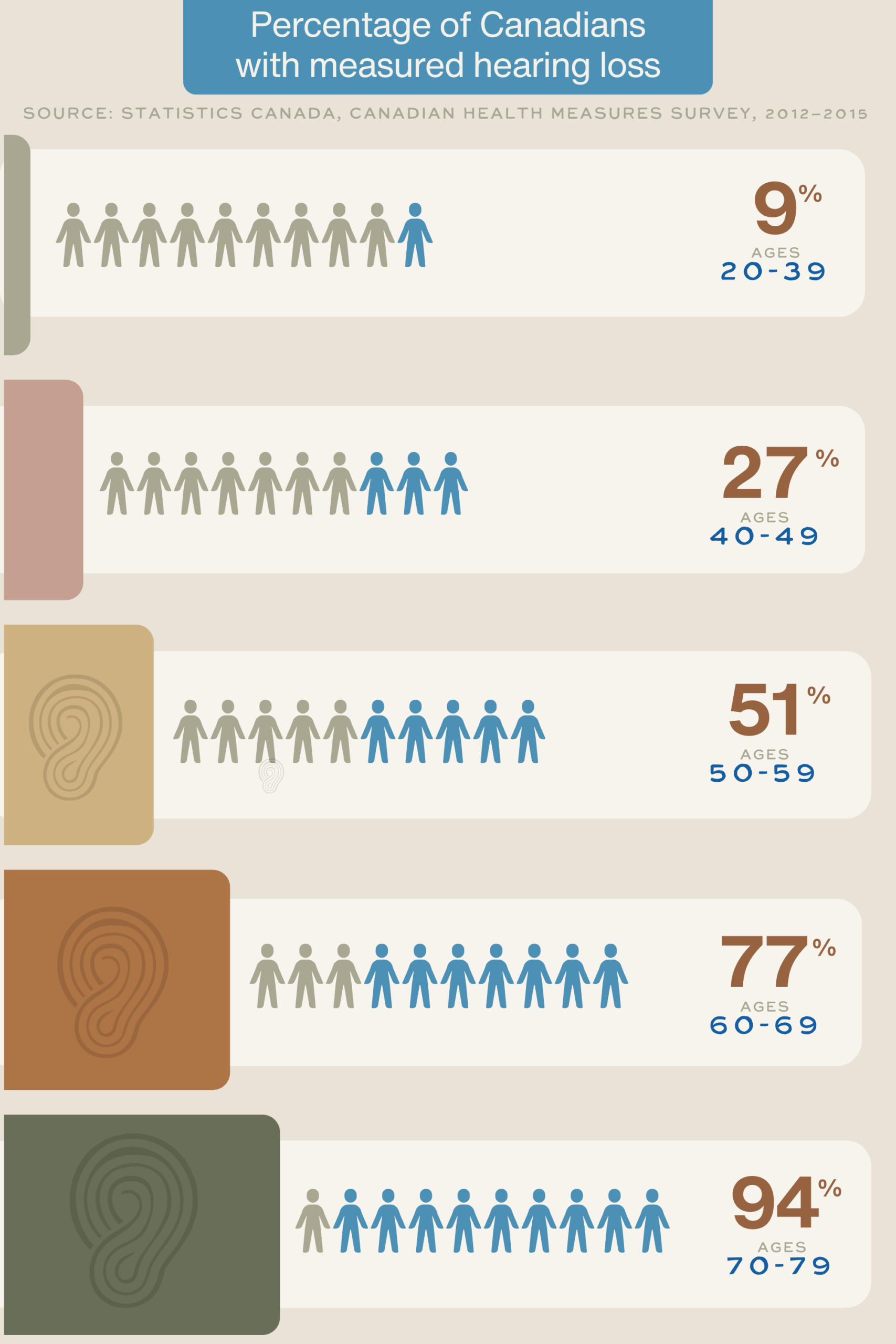
Hearing loss is more common than most people realize:
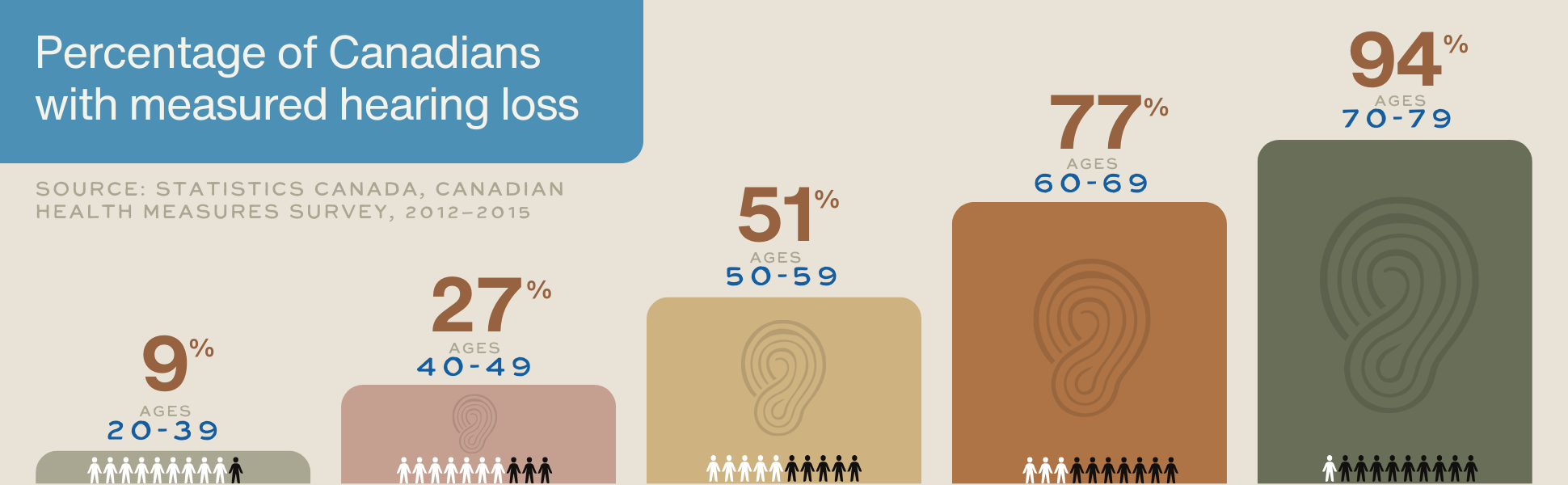
A hearing test with an independent audiologist can help determine whether listening effort is contributing to the fatigue, frustration, or withdrawal you’re experiencing in everyday life. It’s not a verdict. It’s just information about where your energy might actually be going.
When hearing is part of the picture, the right support can make conversations, work environments, and daily interaction feel significantly easier. Life stops requiring quite so much effort to stay connected to.
Meet Michelle & Steve
Michelle was born with hearing loss but wasn’t tested until high school. She got her first hearing aid at nineteen. Steve’s hearing changed more gradually. For years, he didn’t realize how much effort his brain was putting into following conversations, noisy rooms, meetings, restaurants, and everyday life.
Together, we’ve experienced how deeply hearing shapes energy, relationships, attention, confidence, and the feeling of staying connected to the people around you.

Meet Michelle & Steve
Our story begins with two different paths to one truth: hearing shapes everything.
Michelle was born with hearing loss but wasn’t tested until high school. She received her first hearing aid at nineteen. Steve lived for years without realizing he had hearing loss. His brain worked hard to fill in missing sounds, which turned listening into quiet effort.
Together, we’ve seen how good hearing care restores energy, connection, and ease.

Related Articles
SUBSCRIBE TO