

The Relational Cost of Being Told You Heard It Wrong
We were right there. We heard what we heard. And somehow we still end up being the ones trying to prove it afterward.
“That’s not what I said.”
And suddenly the original conversation is gone.
Whatever we were actually trying to discuss gets replaced by something else entirely. Now we’re standing in the kitchen or the car or the middle of a grocery store aisle trying to reconstruct the last thirty seconds of reality with the concentration of someone reviewing security footage.
We were paying attention. We know we were. We can still hear the shape of the sentence in our head.
But almost certain is a difficult position to defend.
Especially when another person sounds completely confident.
After a while, a strange hesitation starts creeping into ordinary conversations. Not dramatic enough to notice right away. Just a tiny internal pause before responding. A quick mental replay. Did they say Tuesday or Thursday. Did they say seven or eleven. Did they ask us to bring the blue one or the black one.
And because most conversation moves too quickly for careful verification, a lot of us start making little social calculations constantly without even realizing it.
Sometimes we nod when we missed the last few words because asking someone to repeat themselves again already feels expensive.
Sometimes we laugh half a second late because we were still translating the sentence.
Sometimes we pretend we heard something clearly because the effort of stopping the entire interaction to untangle it feels worse than just moving forward and hoping context fills in the missing pieces later.
The exhausting part isn’t always the misunderstanding itself.
It’s the accumulation of tiny moments where our own perception starts feeling slightly less solid than it used to.
Especially in relationships.
Because people who spend a lot of time together stop repeating themselves carefully after a while, or just say never mind.
Conversation gets faster. More abbreviated. Words arrive half finished because familiarity fills in the rest. Someone answers from another room while running water. Someone speaks while unloading groceries facing the refrigerator. Entire marriages eventually become built from fragments, callbacks, sentence pieces, inside references, mumbled logistics shouted down hallways.
Most of the time it works.
Until it doesn’t.
Then suddenly we’re standing there trying to explain that we genuinely thought we heard one thing while another person insists they said something else entirely, and the whole conversation starts drifting into a subtle question neither person fully names out loud:
Can we trust your version of reality here?
That question lands heavier than people realize.
Because the problem with hearing strain is that uncertainty rarely stays contained to sound alone. After enough small misses, enough corrections, enough “That’s not what I said,” a lot of us start becoming cautious with our own perception in general.
We double-check more. Hesitate more. Ask “wait, what?” more carefully. Stay quieter in group conversations because certainty starts feeling socially expensive.
And externally, this often looks incredibly normal.
We still go to work. Raise kids. Answer emails. Meet friends for dinner. Meanwhile there’s this quiet ongoing calculation happening underneath ordinary interaction all the time. How confident are we in what we think we heard. How much energy do we have left to verify it. Is this important enough to ask them to repeat again.
The strange thing is how often we interpret this as a personality issue first.
Maybe we’re distracted lately. Maybe we’re becoming forgetful. Maybe communication in the relationship is getting worse. Meanwhile part of the strain is simply coming from how exhausting it is to keep rebuilding conversations from incomplete information all day long.
A lot of us adapt before we fully realize we’re adapting.
We start positioning ourselves carefully at restaurants. Watching faces more closely. Filling in gaps from context. Avoiding loud places when we’re already tired. Pretending we caught the joke because everyone else already moved on three sentences ago.
The adaptations themselves tell the story.
When Listening Starts Requiring More Effort
Most hearing changes happen gradually. People usually notice the exhaustion before they notice the hearing itself.
Conversations get harder to follow when there’s background noise. Meetings feel disproportionately draining. Group settings require more concentration than they used to. By the end of the day, many people feel mentally overloaded without fully understanding why.
Because the shift happens slowly, it rarely feels obvious. People tend to blame stress, burnout, aging, introversion, distraction, poor sleep, or just the general weight of modern life. Sometimes those things are part of it. Sometimes the brain has simply been working much harder to keep up with sound than anyone realizes.
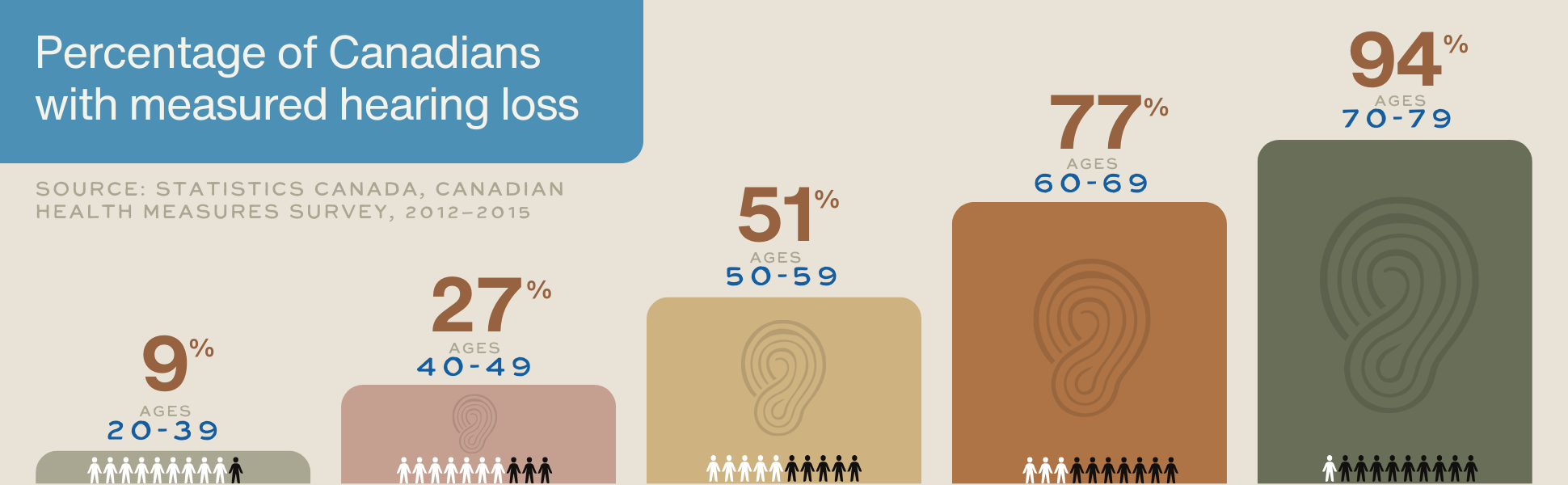
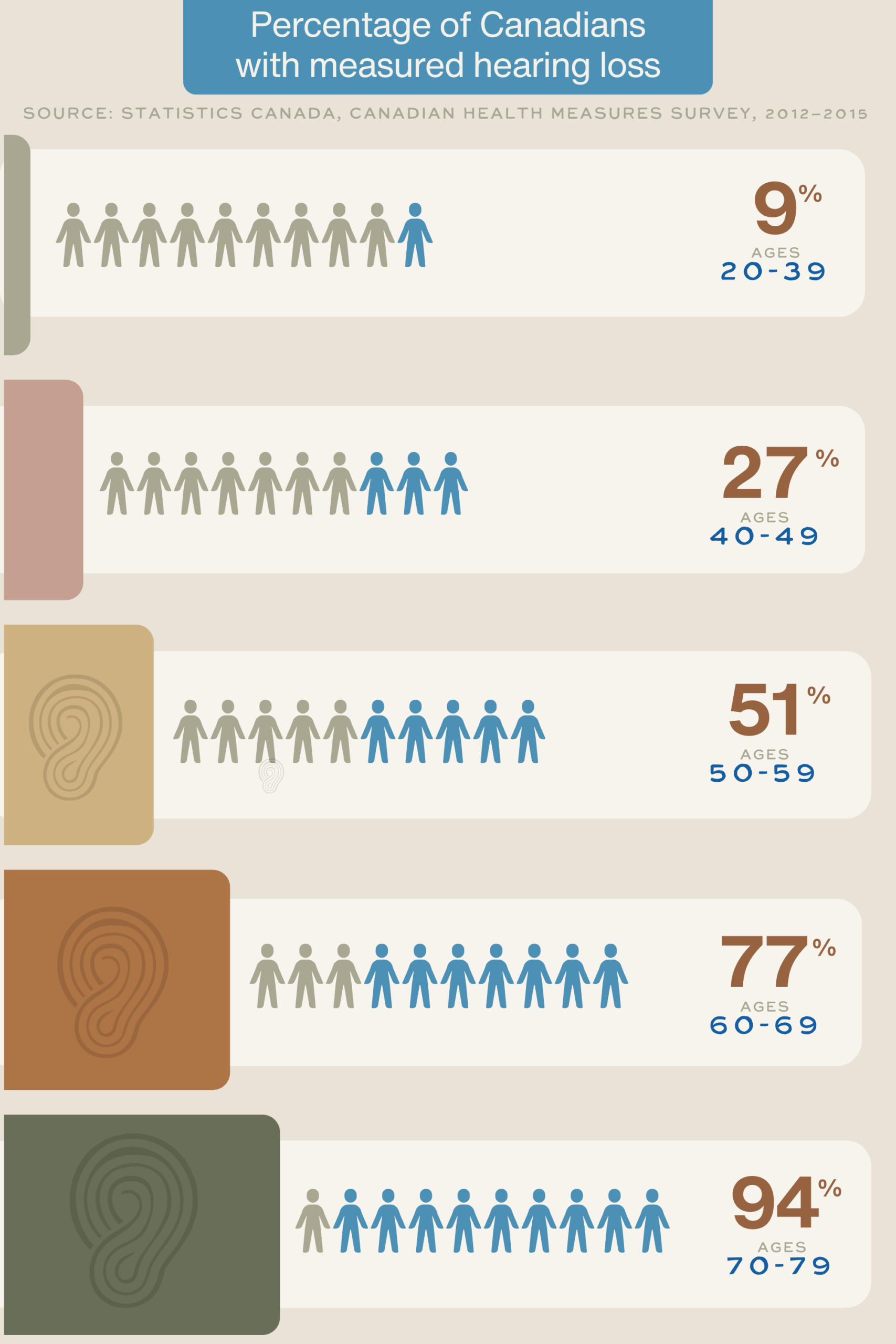
Hearing loss is more common than most people realize:
A hearing test with an independent audiologist can help determine whether listening effort is contributing to the fatigue, frustration, or withdrawal you’re experiencing in everyday life. It’s not a verdict. It’s just information about where your energy might actually be going.
When hearing is part of the picture, the right support can make conversations, work environments, and daily interaction feel significantly easier. Life stops requiring quite so much effort to stay connected to.
Meet Michelle & Steve
Michelle was born with hearing loss but wasn’t tested until high school. She got her first hearing aid at nineteen. Steve’s hearing changed more gradually. For years, he didn’t realize how much effort his brain was putting into following conversations, noisy rooms, meetings, restaurants, and everyday life.
Together, we’ve experienced how deeply hearing shapes energy, relationships, attention, confidence, and the feeling of staying connected to the people around you.

Meet Michelle & Steve
Our story begins with two different paths to one truth: hearing shapes everything.
Michelle was born with hearing loss but wasn’t tested until high school. She received her first hearing aid at nineteen. Steve lived for years without realizing he had hearing loss. His brain worked hard to fill in missing sounds, which turned listening into quiet effort.
Together, we’ve seen how good hearing care restores energy, connection, and ease.
Related Articles
SUBSCRIBE TO